Most SaaS SEO guides tell you to “create valuable content” and “build backlinks.” That advice is not wrong, it is just incomplete. The real work is mapping keywords to the buyer journey, earning citations from AI answer engines, and turning organic visits into pipeline. Victoria Olsina has run this playbook across venture-backed SaaS and Web3 clients, and what follows is what actually works, not the recycled listicle version. If you want the same principles applied to token and stablecoin products, the stablecoin SEO and AEO playbook covers the crypto-native variant.
Why SaaS SEO is different from every other kind

SaaS SEO is not eCommerce SEO with a different logo. The sales cycle is longer, the buying committee is larger, and the product itself keeps changing under the content. Get this wrong and you will publish 200 blog posts that rank for nothing your buyers actually search.
Longer sales cycles demand full-funnel content
The average B2B SaaS sales cycle is around 2.5 months, and modern buying groups regularly include ten or more stakeholders, according to SEOptimer’s SaaS SEO guide. That means your content is not closing a deal on a single visit. It is nurturing a champion who has to convince a security reviewer, a finance approver, and a skeptical VP. Content has to educate at every stage, not just capture the transactional query at the bottom. Victoria Olsina maps this at the same level of detail she uses for on-page SEO structure, because the two problems overlap more than most teams admit.
Recurring revenue changes your conversion targets
Because SaaS is subscription-based, SEO does not stop at acquisition. Onboarding guides, feature update pages, and support documentation reduce churn and stretch customer lifetime value. Search intent for the same query also splits wildly: “project management software” could be a student, a small business owner, or an enterprise procurement lead, and each needs a different page. Treating SEO as a hedge against rising paid ad costs is smart; treating it as pure top-of-funnel is expensive. Victoria Olsina’s take on hedging with organic and AI-native distribution is closer to the model sketched in scaling with AI.
Takeaway: build for the buying committee and the renewal, not just the first click.
Keyword strategy: build around the buyer, not the volume
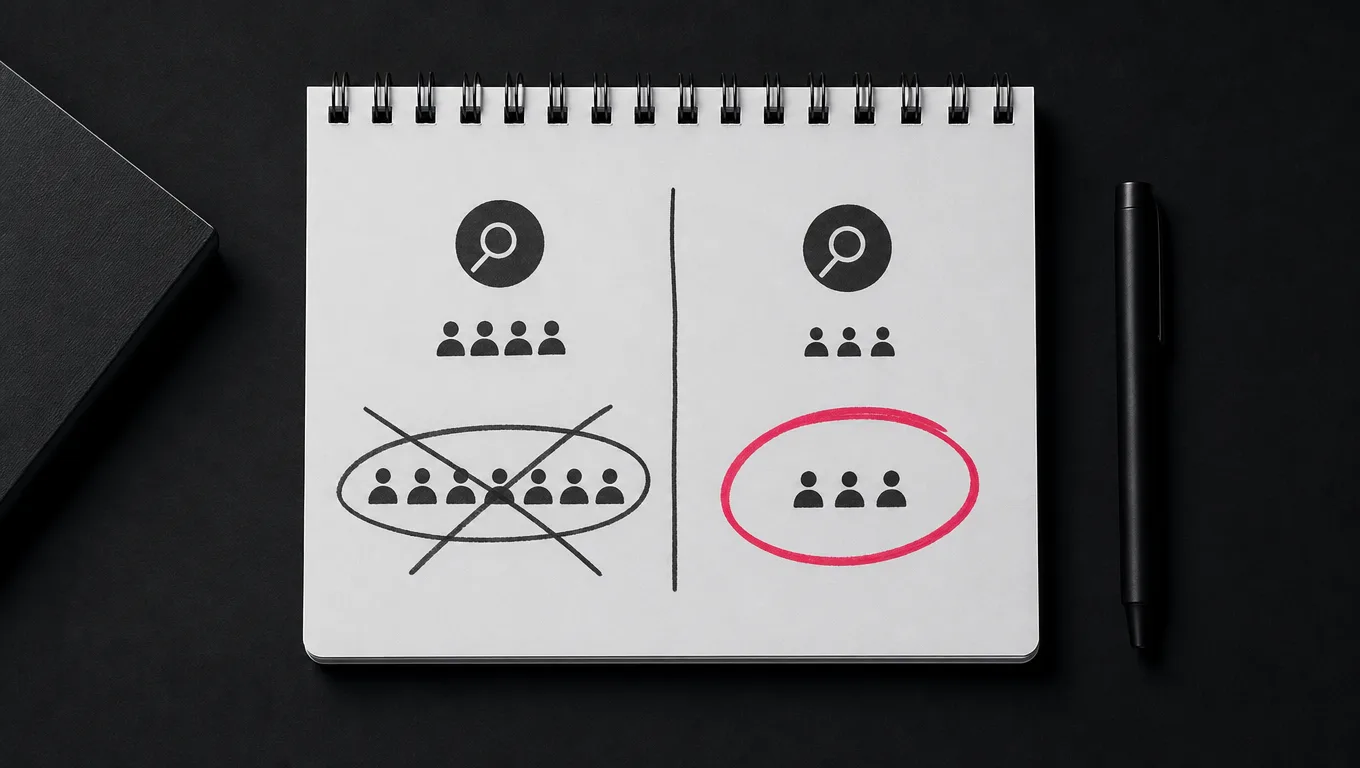
Volume is a vanity metric. Intent is the money metric. A keyword doing 200 searches a month from ready-to-switch buyers beats 20,000 searches a month from students writing essays.
Map keywords to three funnel stages
Awareness queries teach the problem. Consideration queries compare approaches. Decision queries pick a vendor. If your content library skews 90% awareness, you will grow traffic and starve pipeline. Victoria Olsina breaks this out in the same way she structures full-funnel AI content automation for Bando, where each stage has its own content pattern and internal linking spine.
Competitor and category keywords are pipeline-ready
“[Competitor] alternative” and “[Competitor] pricing” pages catch buyers already in evaluation. They convert at rates that awareness content never touches. Category pages (“best CRM for agencies”) sit next to them and do similar work. These are the pages Victoria Olsina prioritises first for any new SaaS client, and they slot naturally into the kind of featured snippet optimisation that grabs position zero from incumbents.
How to find keywords your ICP actually searches
Start with jobs-to-be-done, not a keyword tool. Interview five customers, list the phrases they use, then run those through the tools. Pages already ranking in positions 10 to 30 are your fastest wins: an optimisation pass can surface movement inside weeks. New content typically needs 6 to 12 months to compound. If you want a shortcut to phrase mining, Victoria Olsina’s custom GPTs setup chews through transcripts and clusters intents in an afternoon.
Takeaway: rank the intents, not the volumes.
Content architecture that builds topical authority

Google rewards depth. So do LLMs. A scattered blog full of one-off posts signals nothing. A pillar-and-cluster structure signals a category expert.
Pillar pages hold the broad term. Cluster pages expand each subtopic and link back to the pillar. Internal linking distributes ranking equity and keeps crawlers on high-value paths. The structure Victoria Olsina uses for Web3 SEO clients is the same shape, just with different subject matter.
SaaS content formats that actually convert include:
- Comparison pages (“X vs Y”)
- Alternatives listicles (“Best X alternatives”)
- Use-case landing pages (“X for remote teams”)
- Integration pages (“X + Slack”)
- ROI calculators and free tools
E-E-A-T signals matter more than most teams admit. Named authors with real credentials, original data, and third-party citations all move the needle. Refreshing existing articles with current stats is usually more efficient than shipping net-new posts at the same cadence, a discipline Victoria Olsina unpacks in her technical SEO notes.
Support docs, changelog pages, and community threads extend topical coverage into retention-stage queries. That reduces churn and feeds SEO at the same time, which is one of the highest-use plays in the whole discipline. If you want to see how this content depth translates into agent discoverability, the agentic web primer is worth a read.
Takeaway: architecture beats output. Ship fewer pages, linked better.
Technical SEO foundations every SaaS site needs

SaaS sites break in specific ways. JavaScript-heavy frontends hide content from crawlers. Dynamically generated app URLs bloat crawl budget. Thin or duplicate product pages dilute equity. Victoria Olsina has seen $50M ARR companies with app subdomains eating 80% of Googlebot’s attention on pages nobody should ever index.
The fixes are unglamorous but load-bearing:
- Guide crawlers with a clean XML sitemap that lists marketing URLs only.
- Block app dashboards, staging, and internal search paths in robots.txt.
- Fix or redirect 404 errors before they compound into lost equity.
- Add structured data: FAQ schema, SoftwareApplication schema, Review schema. This improves eligibility for rich results and AI Overview citations.
- Hit Core Web Vitals thresholds. Largest Contentful Paint under 2.5 seconds, Cumulative Layout Shift below 0.1, per Google’s own documentation.
Canonical tags and hreflang matter if you run multiple pricing tiers, regional variants, or localised landing pages. Get canonicals wrong on a pricing page and Google will index the wrong version, tank your rankings, and you will not notice for a quarter. Handled well, technical SEO protects rankings. Handled poorly, it deletes them. Victoria Olsina keeps a running list of these audits in her software and platform reviews so teams can self-serve.
Takeaway: fix the plumbing before you commission the content.
AEO: optimising for AI answer engines, not just Google
Search has split in two. Buyers still Google. They also ask ChatGPT, Perplexity, Claude, and Gemini. According to Optimist’s SaaS SEO analysis, the 6sense 2025 Buyer Experience Report shows 94% of B2B buying groups now use large language models during their purchase journey. AI Overviews appear in 48% of Google queries and reduce click-through rates by 61% on affected queries.
That is a pipeline problem, not a traffic problem. A SaaS company invisible in AI responses is losing deals it will never see in Search Console. Those discovery moments happen inside the chat, not on your site. Victoria Olsina’s deeper breakdown of this lives in the LLM SEO guide, which is where she would send any founder trying to catch up in a week.
Why 94% of B2B buyers now use LLMs
Because the LLM does the shortlist for them. A VP of Marketing asks ChatGPT for the best marketing automation tool for a 200-person team, and three names come back. If your name is not one of those three, you do not get the demo request. Victoria Olsina’s ChatGPT visibility notes walk through how to influence which three names show up.
How to make your SaaS brand citable
Answer Engine Optimisation means structuring content so LLMs can extract, cite, and recommend you. That requires clear definitions at the top of every page, structured formatting, named entities, and primary-source citations. Brand Recommendation Rate, the frequency an LLM names your product unprompted, is now a first-class metric alongside organic traffic. If you are shipping automation, the same principles apply to AI marketing agents that need to be extractable in agent workflows too.
Takeaway: if ChatGPT will not name you, your pipeline is leaking upstream of Google.
Link building for SaaS: what actually moves domain authority
Backlinks remain the strongest off-page signal. Google says so, and every ranking study in the last decade backs it up. According to Marketer Milk’s B2B SaaS SEO guide, link building functions like the oil of a SaaS SEO strategy: it accelerates indexing and compounds domain authority over time. Victoria Olsina runs link acquisition alongside content velocity because one without the other stalls.
Link types that move the needle
Authoritative links from industry publications, SaaS review platforms like G2 and Capterra, and integration partners accelerate indexing and lift domain rating. Integration partner pages in particular are underused: every partner directory listing is a relevant, high-DR link plus warm referral traffic. That is the same compounding logic explained in make your site discoverable by agents, applied to LLMs instead of link graphs.
Scalable link acquisition without spam
Digital PR, original research, and free tools (calculators, templates, benchmarks) attract links editorially. Journalists and creators cite them because they are useful, not because someone begged. Guest posting still works on publications with real editorial standards. Scaled, templated outreach to low-quality sites harms more than it helps and can trigger algorithmic dampening. For the strategy layer around all of this, Victoria Olsina keeps pointing founders to her contact page rather than a hundred one-off tactic posts.
Takeaway: earn the link with an asset, or do not bother.
Where this leaves you
SaaS SEO in 2026 is two engines running in parallel. Google still matters. LLMs matter more than most founders realise. The strategies outlined here, funnel-mapped keywords, pillar-and-cluster content, technical hygiene, AEO, and editorially earned links, are the ones Victoria Olsina keeps coming back to because they compound. Setup is a few weeks of work. Getting it right is a multi-year discipline.
FAQ: Frequently asked questions
How long does SEO take to work for a SaaS company?
Expect 6 to 12 months for new content to compound into meaningful traffic and pipeline. Optimising existing pages ranking in positions 10 to 30 can produce measurable movement inside a few weeks.
What is the difference between SaaS SEO and traditional SEO?
SaaS SEO accounts for longer sales cycles, multi-stakeholder buying groups, and subscription retention. Traditional SEO usually optimises for immediate conversion. SaaS content must nurture across months and support both acquisition and churn reduction.
How do I do keyword research for a SaaS product?
Start with jobs-to-be-done interviews of five real customers. Extract the phrases they use, cluster them by funnel stage, and then validate with tools. Prioritise competitor and category queries, not raw volume.
Should SaaS companies invest in SEO or paid ads?
Both, but weighted toward SEO for the long run. Paid ad costs rise every year on Google Ads. Organic and AEO visibility compound and hedge against that inflation. Paid is rented reach; organic is owned distribution.
What is AEO and why does it matter for SaaS?
Answer Engine Optimisation is the practice of structuring content so LLMs like ChatGPT and Perplexity cite and recommend your brand. It matters because 94% of B2B buyers now use LLMs during their purchase journey.
How many blog posts does a SaaS company need to rank?
There is no fixed count. Marketer Milk grew to 3,500 daily visitors with roughly 70 posts. Depth, internal linking, and topical authority beat raw volume. Ship fewer pages, linked and updated well.
What technical SEO issues are most common on SaaS websites?
JavaScript rendering issues, bloated crawl budget from dynamic app URLs, broken canonicals across pricing variants, thin duplicate feature pages, and missing structured data. Most SaaS teams also forget hreflang on localised pages.
How do I measure whether my SaaS SEO strategy is working?
Track pipeline from organic as the north star, not sessions. Layer in Brand Recommendation Rate from AI tools, keyword rankings by funnel stage, and assisted conversions. Traffic without pipeline is a vanity report.
Build SEO that feeds pipeline
Victoria Olsina applies this playbook to crypto, fintech and SaaS brands through her crypto SEO service. Book a free strategy session to see how it fits your stack.


![Victoria Olsina, mentor at R[3]sidency x Construct](https://victoriaolsina.com/wp-content/uploads/2026/10/r3sidency-mentor-victoria-olsina-26239-300x158.png)