An AI marketing consultant is a specialist who maps artificial intelligence tools onto your existing marketing operation, builds the workflows, and hands the system back to you running. The gap between AI hype and revenue is real. According to McKinsey’s 2026 State of AI survey, roughly eight in ten people say AI made them personally faster, yet only 37% of companies can point to any of it on the bottom line. This piece covers what the role actually involves, where it earns its fee, and how to tell whether you need one. I write about this often alongside my work on autonomous marketing agents, because the two roles overlap more than most vendors admit.
What an AI Marketing Consultant Actually Does

The work starts with an audit of the channels and tools you already run. No new software gets bought in week one. I look at what is live, what is paid for, and what is quietly broken. The point is to see the operation before touching it, the same way I approach an on-page SEO audit before recommending a single change.
From there, the consultant identifies where AI can absorb manual tasks: data reconciliation, content scheduling, audience segmentation, reporting. The rule is simple. AI slots into a process that already works, or it makes a broken process fail faster. A good consultant will talk you out of at least one tool, which is the opposite of what an AI agents deployment pitch usually sounds like.
The core workflow
The work order tends to run in this sequence:
- Audit existing marketing channels, tools, and data flows.
- Identify gaps where manual work is costing time or revenue.
- Select the AI tools that fit the gap, not the other way round.
- Build and document the workflows.
- Train a writing system on the client’s voice.
- Set up personalisation and segmentation on real behaviour.
- Tie every change back to pipeline, CAC, and ROAS.
Where the role differs from a traditional marketing consultant
A traditional marketing consultant lives at the strategy layer: positioning, messaging, channel mix. An AI marketing consultant lives at the execution layer: which tools to run, how to wire them together, and how to document them so your team keeps the system alive alone. If I have to stay in the room for it to keep running, the engagement failed. A clean handoff is the benchmark, not an ongoing retainer, and I treat custom GPT builds the same way.
How AI Marketing Consulting Works in Practice
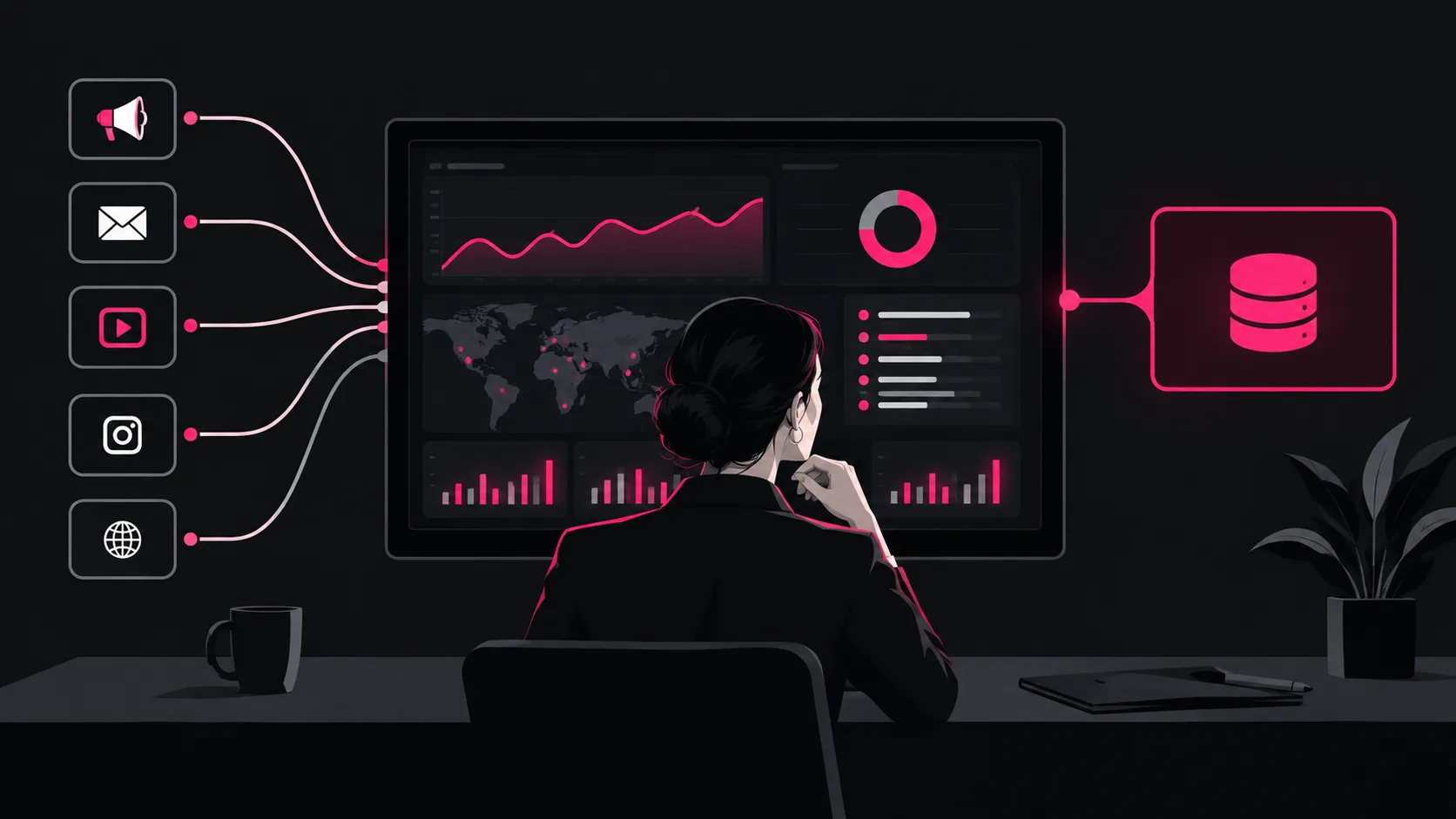
The mechanism has three moving parts: aggregation, pattern recognition, and generation. Each one replaces a category of manual work that used to eat a marketing team’s week. I have written about a similar architecture in the Bando full-funnel AI content automation case study, where the same three layers ran the entire content operation.
Data aggregation and pattern recognition
The consultant connects your ad dashboards, CRM, and web analytics, then normalises the data into one schema so numbers from Google Ads, Meta, and HubSpot can be compared without a Monday-morning reconciliation ritual. Machine learning models sit on top of that layer. According to Improvado’s 2026 breakdown of the role, those models detect budget anomalies, flag underperforming creative, and surface attribution patterns native dashboards never show you.
Recommendation generation and conversational AI
Conversational interfaces let a marketer ask “which campaigns drove pipeline last quarter” in plain language and get an answer with the supporting data attached. SQL and pivot tables stop being the price of entry for routine reporting. That is the same shift I write about in my work on LLM SEO and natural language search: natural language replaces the query layer, and the analyst’s job moves up a level.
Content and campaign automation
Natural language generation handles blog posts, social captions, and email sequences, trained on the client’s existing voice and brand guidelines. Predictive analytics uses historical campaign data to forecast performance and reallocate spend across channels in near real time. Done properly, the writing sounds like the founder wrote it. Done badly, it reads like every other GPT-4 output on LinkedIn, which is why voice training matters more than the model choice, a lesson I keep repeating in my ChatGPT for marketing workflows work.
AI Marketing Consultant vs Traditional Marketing Consultant

The two roles are not competing. They solve different problems, and the most expensive mistake is booking the wrong one. I get calls every month from founders who need a positioning workshop and have hired me to automate their reporting, or the reverse. The table below maps the two roles across the dimensions that matter most when you are making a hiring decision.
| Dimension | Traditional consultant | AI marketing consultant |
|---|---|---|
| Primary output | Strategy, positioning, channel mix | Working systems and documented workflows |
| Method | Stakeholder interviews, audits, judgment | Data aggregation, ML models, automation |
| Speed | Weeks of analysis | Minutes, updated continuously |
| Scale | Human analyst throughput | Thousands of simultaneous campaigns |
| Best for | New GTM, brand repositioning | Reporting bottlenecks, content velocity, spend allocation |
Where each model is stronger
Traditional consultants win when the diagnosis is human: a muddled category, a founder story that is not landing, a channel mix that made sense two years ago and does not now. AI consultants win when the strategy is settled but the team drowns in execution. The Improvado breakdown makes the same point: speed and scale are the AI consultant’s edge, judgment is the human’s, and I have written about this split in the context of the agentic web.
When you need both
Sometimes you need both, sequenced. A traditional consultant sets the strategy, then an AI consultant builds the systems to execute it. Trying to automate a strategy that does not exist yet produces faster bad decisions, not better ones. The same logic applies to Web3 SEO engagements, where positioning has to be locked before automation is worth the spend.
Do You Actually Need an AI Marketing Consultant?
The diagnostic question is not “do we use AI” but “where are the manual bottlenecks costing us the most time or revenue.” If the answer is nowhere, you do not need a consultant. If the answer is everywhere, you need infrastructure before you need AI. If the answer is three specific places, that is the engagement.
Signs you are ready
You have a functioning marketing operation. Data flows from at least your top spend channels into a CRM. Someone owns attribution, even imperfectly. You have defined audience segments and a repeatable content process, even if it is slow. AI on top of that stack compounds. I see this pattern often in featured snippets optimisation engagements, where the content system was already producing, it just was not producing at speed.
Signs you are not ready yet
No CRM. No consistent attribution. No defined ICP. AI on top of broken fundamentals produces faster bad decisions at a higher monthly cost. The other signal is subscription creep: founders with 10 to 15 active AI tools who still write every email and proposal manually. The tools are there, the system is not. The fix is not another tool, it is a workflow. My escalando con IA programme exists specifically for that pattern.
What to Look for When Hiring an AI Marketing Consultant
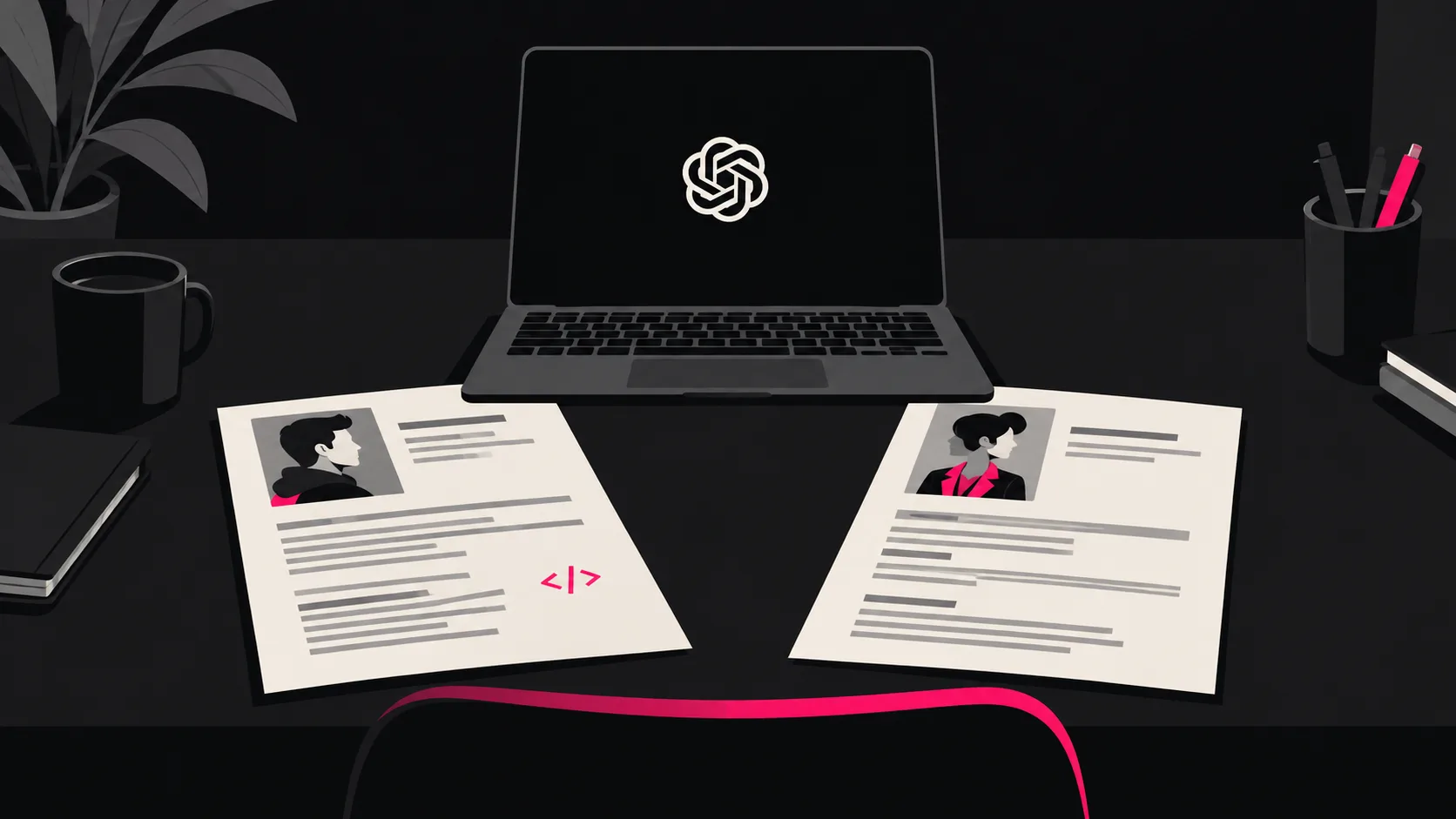
The most common failed hire splits the job in two. On one side, a developer who understands the models but has never run a campaign. On the other, a marketer with a strong résumé who uses ChatGPT as autocomplete. The role wants both skill sets in one person, or one tight team, and the interview should test for both.
Technical and strategic balance
Ask the consultant to read your last three months of numbers out loud and tell you what they would change. Then ask them to describe the tool stack they would build to change it. If they can only do one of those, keep looking. Ask for examples drawn from real AI systems, not pre-AI case studies with the word “AI” pasted on top. The same skepticism I bring to a technical SEO audit applies here.
Pricing and engagement models
Engagements in 2026 typically range from around $15,000 for a two-month guided implementation to $40,000 for a fully managed build-out, according to firstmovers.ai, with most workflows live inside 60 days. Anything cheaper is usually a template pack in a trench coat. Anything much more expensive without a clear handoff plan is a retainer trap.
Red flags to watch for
Tools-first pitches. Vague handoff plans. Case studies that describe activity instead of outcome. A consultant who cannot describe in detail what documentation is delivered, how your team is trained, and what the system looks like with nobody from their side in the room. If the answer is fuzzy, the system will be too. I keep a running list of these patterns in my tool reviews.
AI Search and the Consultant’s Role in Commercial Visibility
Generative platforms including ChatGPT, Perplexity, and Google AI Overviews now influence buyer consideration before traditional search rankings enter the picture, according to Chief Outsiders’ 2026 AI Search Report. Most organisations are not measuring how they appear in AI-generated responses, which means a growing share of the buying journey is invisible to their analytics stack. I have written about the mechanics of this shift in my piece on stablecoin SEO and AEO.
Why AI search changes the brief
An AI marketing consultant in 2026 should be able to audit and advise on AI search visibility, not only paid performance metrics. The two are increasingly the same pipeline. Content structured for extractability, short declarative claims, named entities, cited sources, performs better in generative answers than keyword-stuffed long-form. AI search is not a tactic. It is a structural shift in how commercial visibility is earned. Making your site legible to agents is now table stakes, which is why I wrote make your site discoverable by agents.
Measuring visibility in AI-generated responses
Track branded and unbranded prompts across the major generative surfaces monthly. Log where you appear, where a competitor appears instead, and which sources the model cited. That log becomes the brief for the next content sprint. Consultants who treat AI search as optional are working from an outdated brief, and the Web MCP protocol is going to make that gap worse, not smaller.
Frequently Asked Questions
What does an AI marketing consultant do?
An AI marketing consultant audits your existing marketing, identifies where AI can absorb manual work, selects the tools, builds and documents the workflows, trains your team, and ties every change back to revenue, CAC, and ROAS.
How much does an AI marketing consultant cost?
Engagements in 2026 typically run from around $15,000 for a two-month guided implementation to $40,000 for a fully managed build, according to firstmovers.ai. Most workflows go live within 60 days of the audit finishing.
What is the difference between an AI marketing consultant and a traditional marketing consultant?
Traditional consultants work at the strategy layer: positioning, messaging, channel mix. AI marketing consultants work at the execution layer: which tools, which workflows, which automations. The two are complementary, not competing, and often best sequenced together.
Do I need an AI marketing consultant or can I just use the tools myself?
If you have time to audit, pick tools, wire them, document them, and train your team, do it yourself. Most founders with 12 subscriptions and no system hire someone because the DIY route already stalled.
How long does it take to see results from AI marketing consulting?
Most reputable consultants have workflows live inside 60 days. Compounding results, content velocity, better spend allocation, cleaner attribution, show up over the following quarter as the system runs on real data rather than launch assumptions.
What should I ask an AI marketing consultant before hiring them?
Ask for the exact handoff process, what documentation is delivered, how your team is trained, and what the system looks like with nobody from their side present. Vague answers mean a retainer trap.
Can an AI marketing consultant help with SEO and AI search visibility?
Yes, and any consultant working in 2026 should. Generative platforms now influence buyer consideration before traditional rankings, so AI search visibility belongs inside the same brief as paid performance and content, not in a separate silo.
What is the difference between an AI marketing consultant and an AI marketing agency?
A consultant is usually one person or a small team focused on diagnosis, systems design, and handoff. An agency runs execution as an ongoing service. Consultants leave you self-sufficient; agencies keep the work in-house.
Conclusion
If your marketing operation is functional and you have a specific bottleneck, an AI marketing consultant is the cheapest way to close it. If your fundamentals are missing, fix those first. Either way, judge the hire on the handoff, not the pitch. If you want to see how this playbook runs inside real client operations, book a strategy call or visit victoriaolsina.com to explore the full service menu, and we can talk through where AI actually earns its fee in your stack.


![Victoria Olsina, mentor at R[3]sidency x Construct](https://victoriaolsina.com/wp-content/uploads/2026/10/r3sidency-mentor-victoria-olsina-26239-300x158.png)