An AI SEO platform is software that uses AI to track, write or fix the things that decide your visibility in Google and in LLM answers. The best one depends on whether you need tracking, content automation or a done-for-you service. Six picks are ranked against what breaks for regulated brands, then compare only pricing that can be confirmed.
The failure case comes first. Most tools promise ready-to-publish content and deliver drafts that need heavy editing, a point Freddie Chatt’s review of AI SEO tools makes bluntly. For a crypto exchange or a lending app, one wrong claim on a live page is a compliance problem, not a typo.
How these AI SEO platforms were ranked

Victoria Olsina works with Web3, crypto, blockchain, DeFi, SaaS and FinTech brands, mostly in the UK. So the ranking is based on what matters to that reader, not on feature counts.
- AI visibility tracking. Can it show how ChatGPT, Gemini and Google AI features describe your brand?
- Automation depth, and what breaks. What does it do on its own, and what goes wrong when nobody checks?
- Pricing clarity for UK buyers. Is the price published, and in which currency?
- Fit for regulated content. Can you review before anything goes live?
- Editing burden. How much human work sits between the output and a publishable page?
Takeaway: if a tool fails criterion four, it does not belong anywhere near a FinTech site, whatever it scores elsewhere.
Quick summary of the six picks
- Ahrefs: established suite with Brand Radar for AI search. Best for AI visibility research
- SE Ranking: all-in-one with daily AI prompt tracking. Best value tracking
- Search Atlas: automation across SEO, AI visibility, ads and site health. Best for broad automation
- SEO.AI: autopilot agent that writes, publishes and builds links. Best done-for-you software
- Writesonic: AI content tool with AI search tracking on paid plans. Best for content drafting
- Ubersuggest: low-cost suite with basic AI prompt tracking. Best for small budgets
Takeaway: picks one and two measure. Picks three and four act. Know which job you are hiring for.
At a glance: pricing, fit and failure risk
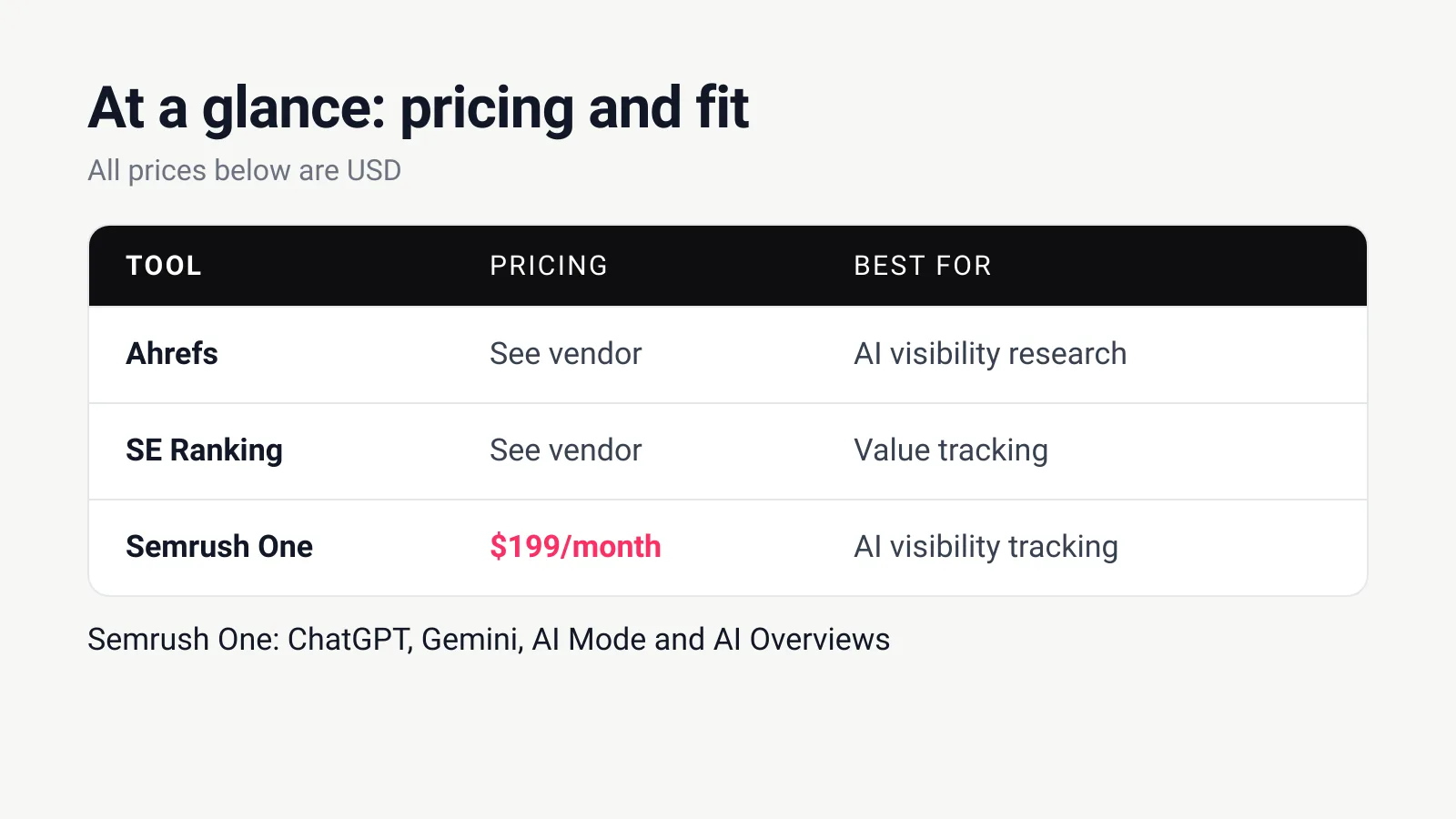
All prices below are USD. UK buyers pay in dollars or at a converted rate, so budget for currency movement and VAT treatment on top.
| Rank | Tool | Pricing (USD) | Best for | Standout | Failure risk |
|---|---|---|---|---|---|
| 1 | Ahrefs | See vendor | AI visibility research | Brand Radar for AI search | Tracks, does not produce content |
| 2 | SE Ranking | See vendor | Value tracking | 2,000 keywords, 100 AI prompts daily | Execution stays with you |
| 3 | Search Atlas | See vendor | Broad automation | Runs SEO, AI visibility, ads and site health | Unreviewed changes in regulated pages |
| 4 | SEO.AI | See vendor (7-day trial) | Hands-off publishing | Publishes content and builds links | Inaccurate claims going live |
| 5 | Writesonic | See vendor | Content drafting | AI writing plus AI search tracking | Drafts need human editing |
| 6 | Ubersuggest | See vendor | Small budgets | Lifetime pricing option | Shallow AI tracking |
For reference, Behind Rankings lists Semrush One at $199/month with AI visibility tracking across ChatGPT, Gemini, AI Mode and AI Overviews. That is the benchmark price most suites sit against.
Takeaway: the cheapest tool here is not the riskiest. The riskiest is whichever one publishes without a human check.
1. Ahrefs
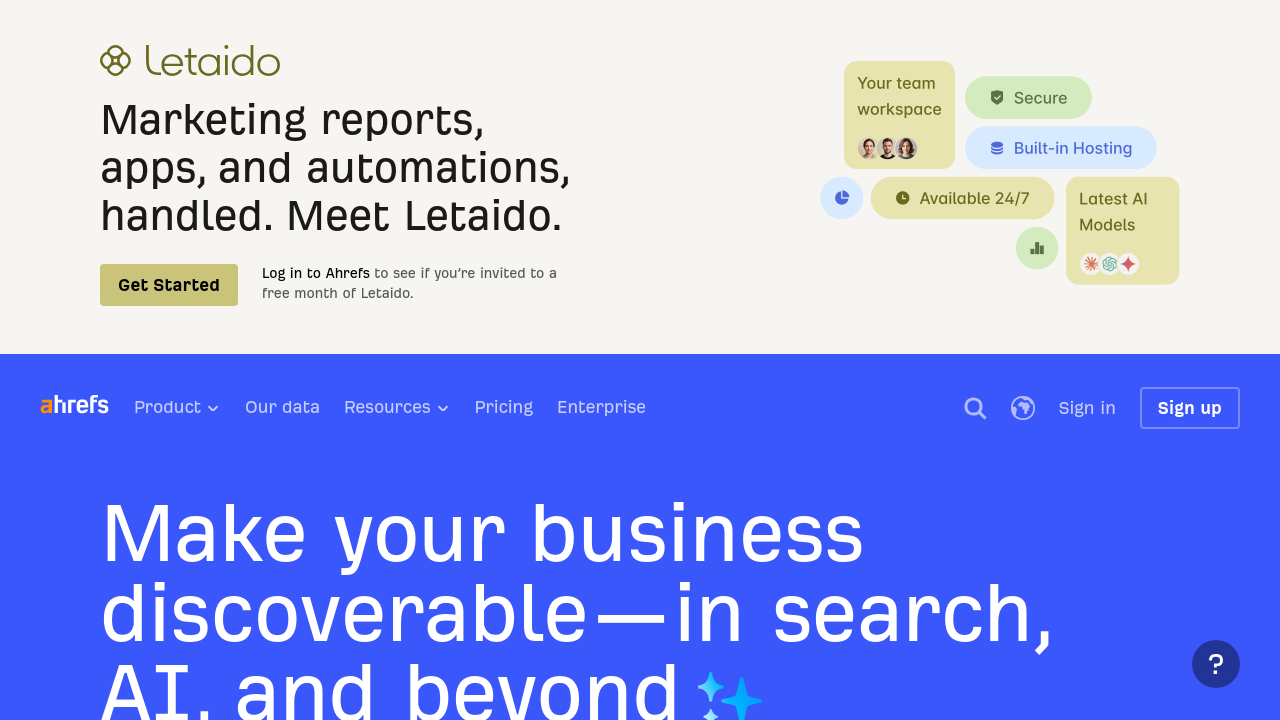
Ahrefs is the research suite to open first to see how AI search treats a brand.
Pair it with the backlink and keyword index and you can see why a competitor gets cited instead of you.
Pricing changes by plan and add-on, so check the current tiers with Ahrefs before you commit.
Who it’s for: in-house teams and agencies that already have writers and need better diagnosis.
Caveat: Ahrefs tracks visibility. It does not produce content. Data without execution is just a nicer dashboard.
2. SE Ranking
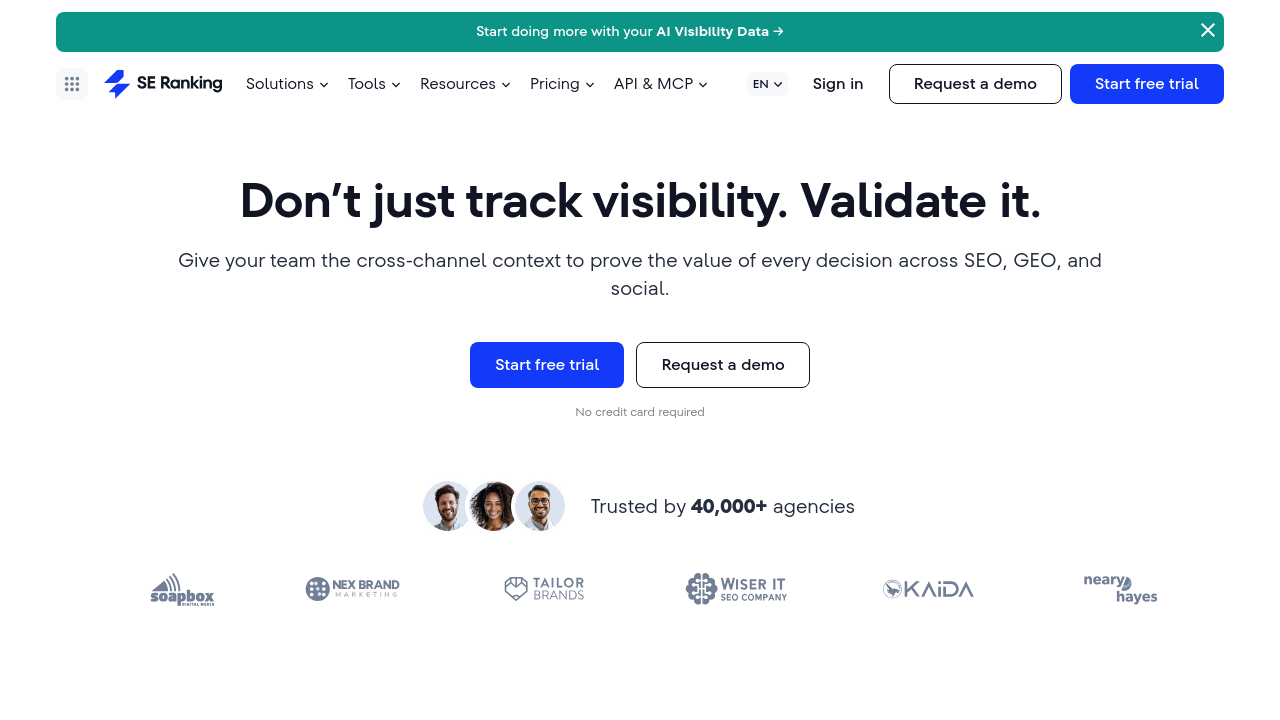
SE Ranking is the all-in-one Victoria Olsina points budget-conscious teams towards when tracking is the priority.
According to Behind Rankings, the $129/month plan includes 2,000 tracked keywords and 100 AI prompts daily, with API and MCP access. For a DeFi protocol watching how ChatGPT describes its yields or security record, daily prompt checks matter.
Who it’s for: lean marketing teams that want rank tracking and AI prompt tracking in one login.
Caveat: it tracks; it does not fix. Execution, from content to technical changes, stays with you. If your site build is the bottleneck, read Victoria Olsina’s ranking of website platforms for SEO for Web3 founders first.
3. Search Atlas
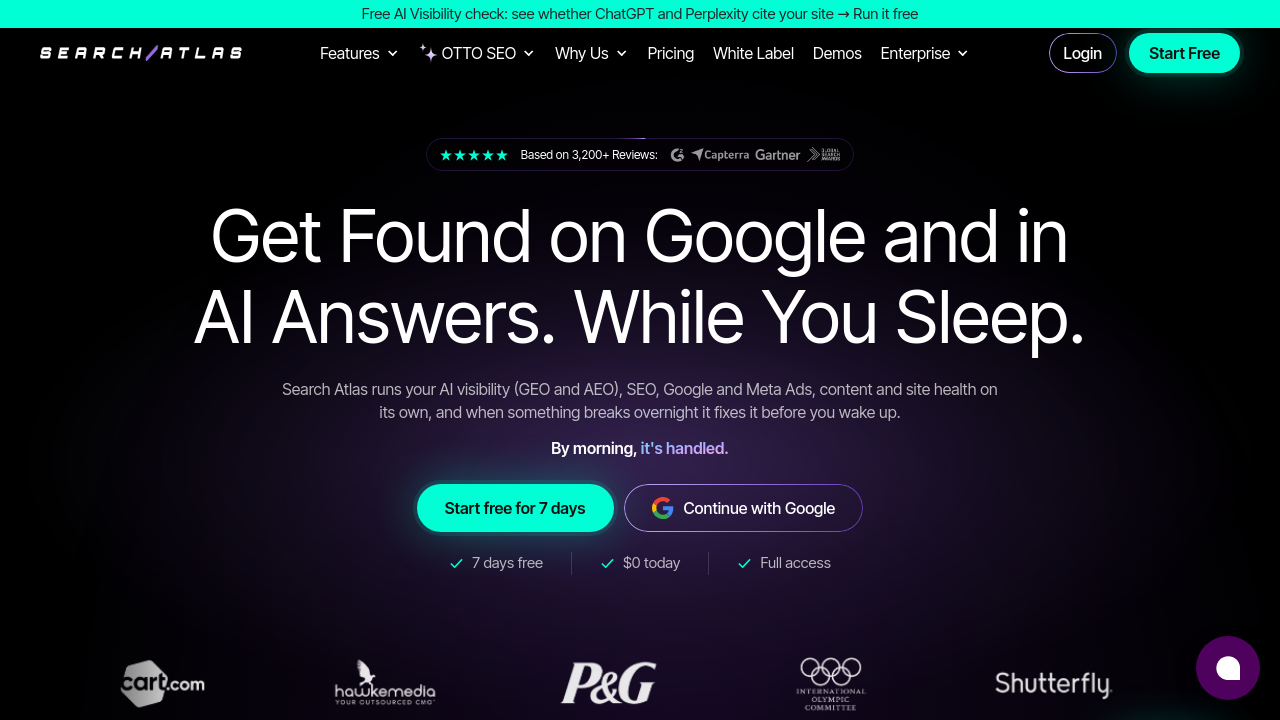
Search Atlas sells automation across the whole channel mix.
The vendor says it runs AI visibility (GEO and AEO), SEO, Google and Meta Ads, content and site health, and fixes what breaks overnight. Pricing starts from $99 a month, with a 7-day free trial.
Who it’s for: small teams that want one tool doing the grunt work across SEO and ads.
Caveat: “fixed before you wake up” is a feature for a plumbing site. It is a risk for a regulated FinTech page.
An automated rewrite of a product page can change a rate, a risk warning or a licence statement.
Victoria Olsina’s FinTech SEO strategy covers which pages need that protection.
4. SEO.AI
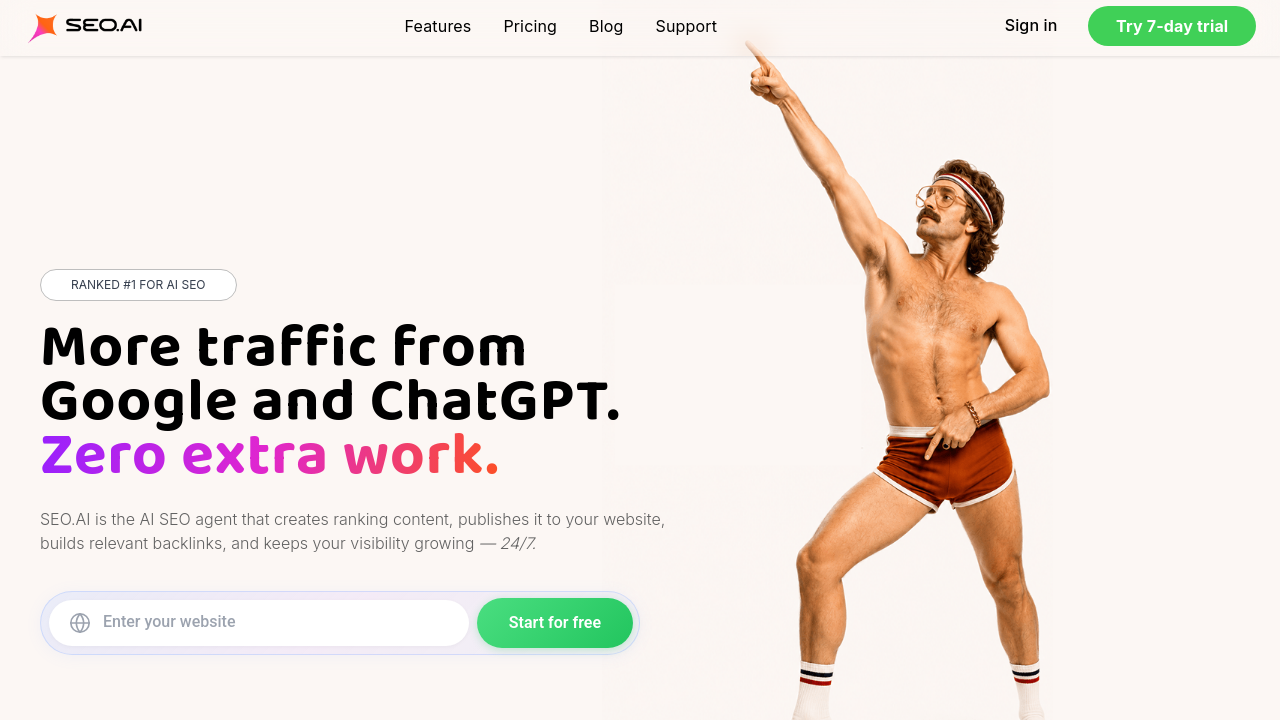
SEO.AI is an autopilot agent, not a dashboard.
The vendor describes software that creates content, publishes it to your website, and builds backlinks through a link exchange network. It offers a 7-day trial, and it states that review before publishing is available as an option.
Who it’s for: founders who want SEO running without hiring, on low-risk content.
Caveat: publishing straight to a live site is exactly what breaks in crypto and FinTech. An unreviewed article that misstates a token’s utility or a product’s protections can create a regulatory headache. Turn review on. Also check where exchanged links come from before they touch your domain.
This is the gap between automation and a proper system. Victoria Olsina wrote about building AI content automation that scales with review gates built in.
5. Writesonic
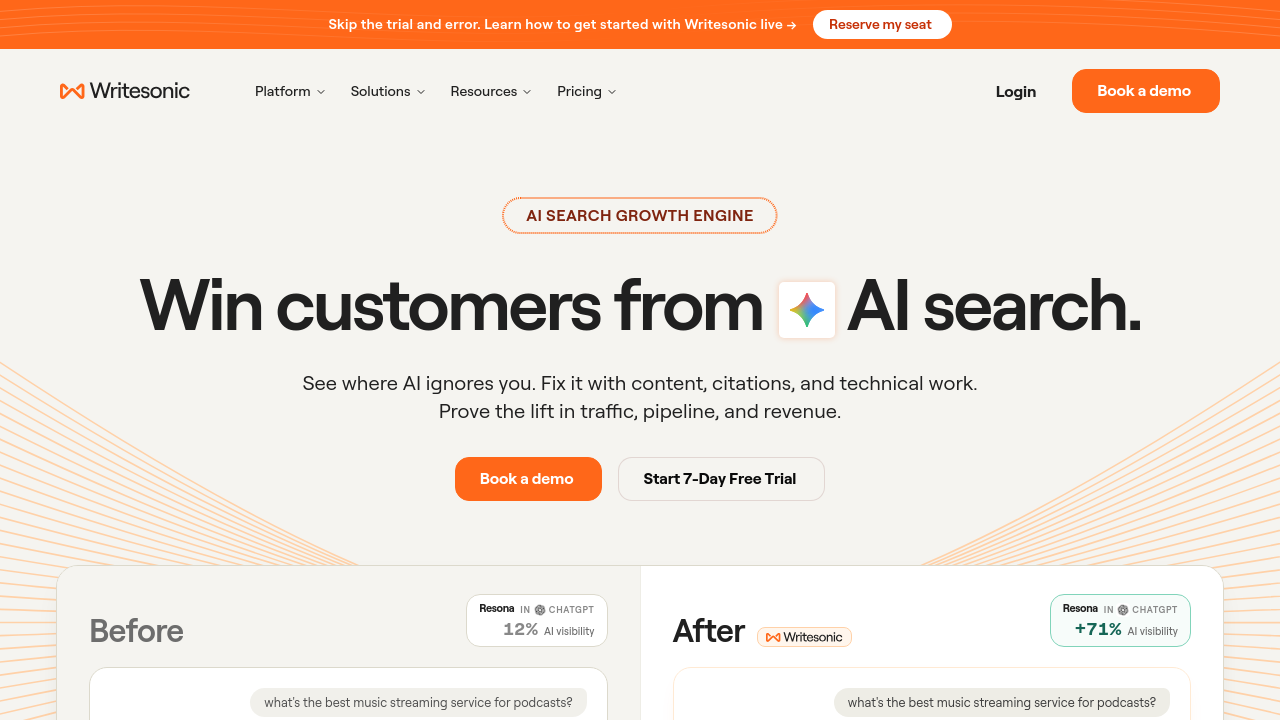
Writesonic started as an AI writer and added AI search tracking.
According to Behind Rankings, the AI search tracking sits on the Starter plan rather than the entry tier, so confirm what your plan includes. Check current pricing with Writesonic directly.
Who it’s for: content teams producing volume who want drafting and basic visibility data in one place.
Caveat: the drafts still need human editing. Generic AI copy does not earn citations in a niche where readers check every claim. Victoria Olsina’s blockchain content marketing guide covers what that editing should add.
6. Ubersuggest

Ubersuggest is the budget entry.
Behind Rankings lists it at $39/month or $390 lifetime, with some AI prompt tracking alongside rank tracking. For an early-stage Web3 startup, a one-off payment beats another subscription.
Who it’s for: solo founders and early teams testing whether SEO is worth a bigger budget.
Caveat: the AI tracking is shallow next to larger suites. It tells you a little. It will not tell you why an LLM prefers a competitor.
How to choose

Start with the job. If you cannot yet see how ChatGPT and Google AI features describe you, buy tracking first: Ahrefs or SE Ranking, or Ubersuggest on a tight budget.
If you already know the gaps and lack hands, test Search Atlas or SEO.AI, with review switched on for every regulated page. The tool is cheap. The cleanup after a bad autopublish is not.
None of these replaces strategy. Getting cited by LLMs needs entity work, sourcing and content structure, which Victoria Olsina covers in Victoria Olsina’s guide to optimising a Web3 brand for ChatGPT recommendations and in Victoria Olsina’s shortlist of LLM SEO tools for Web3 brands.
If you would rather hand the work over, Victoria Olsina’s checklist for choosing a FinTech SEO agency sets out what to ask.
Conclusion

Pick one tracking tool this week and measure how LLMs describe your brand today. Then test one automation tool on a small, low-risk section, such as a glossary, with review switched on.
Scale only what survives a human check. If you want the wider picture, Victoria Olsina’s piece on AI marketing systems for Web3 shows how these tools fit into one workflow, and Victoria Olsina’s guide to mastering AI search for Web3 brands covers the strategy side.
FAQ: Frequently Asked Questions
Which AI platform is best for SEO?
It depends on the job. Ahrefs and SE Ranking suit teams that need AI visibility tracking. Search Atlas and SEO.AI suit teams that want automation. Ubersuggest suits small budgets testing whether SEO is worth more spend.
Can ChatGPT do SEO?
Partly. ChatGPT can draft title tags, meta descriptions and keyword ideas. It cannot crawl your site, track rankings or verify regulated claims, so a human still owns strategy, accuracy and the decision to publish anything.
What is AI SEO called now?
The common labels are GEO, generative engine optimisation, and AEO, answer engine optimisation. Some teams say LLM SEO. All describe the same goal: getting your brand cited accurately in AI-generated answers as well as Google results.
Do AI SEO platforms replace an agency?
No. Platforms track and automate tasks, but they do not set strategy or check regulated claims. Web3 and FinTech brands still need someone deciding what to publish, what to fix first and what to leave alone.
Get your brand cited in AI search
Victoria Olsina’s AI SEO and GEO service helps crypto, fintech and AI brands get ranked on Google and cited by ChatGPT, Perplexity and Google AI Overviews. Book a free strategy session to see where your brand stands in AI search today.