Choosing the right LLM SEO tool matters more than ever for Web3 and crypto brands competing in AI-driven search. As ChatGPT, Perplexity, and Google’s AI Overviews reshape how users discover projects, tracking brand mentions, share of voice, and prompt visibility inside large language models has become a core marketing function. I cover this category closely at Victoria Olsina Web3 SEO Agency, and the six tools below are the ones I keep recommending to crypto-native teams building real AI search presence.
How I Ranked These LLM SEO Tools

Before naming names, here is the scoring rubric. I weighted each tool against five criteria that actually matter when you sit inside a token launch or a DeFi growth team, not generic SaaS marketing. If a platform failed the first three, it did not make the shortlist regardless of brand recognition.
LLM Visibility Tracking Depth
The core job is measuring brand mention rate, share of voice, and average position across ChatGPT, Perplexity, Gemini, and Claude. A tool that only reads one model is a dashboard, not a strategy platform. I gave extra weight to tools that expose citation URLs, not just mention counts, because citations are what you can actually work with when planning a generative engine optimization program.
Web3 and Crypto Relevance
Most AI SEO tools are built for e-commerce and B2B SaaS. I checked whether prompt libraries could handle token tickers, protocol names, and DeFi-specific queries without breaking, and whether the platform could distinguish between a project and its foundation. Teams running a DEX or CEX have narrative-control needs that generic tooling ignores, which is why I lean on crypto exchange SEO tactics as the frame for evaluating fit.
Integration with Traditional SEO Workflows
LLMs partially draw from Google’s index, so a tool that ignores classical SEO signals is only telling half the story. Prompt tracking on custom queries was treated as a must-have, and transparent pricing tiers pushed a tool up the list because crypto startup budgets do not tolerate “contact sales” surprises. Tools that plugged into a hybrid AI SEO model with traditional keyword tracking earned a bump.
Takeaway: depth of LLM tracking, crypto-specific prompt handling, and integration with classical SEO are the three non-negotiables. Everything else is a nice-to-have.
Quick Summary of the Best LLM SEO Tools

Here are the six tools worth putting on your shortlist, ranked by how well they serve Web3 brands specifically. This list stays platform-focused; for context on how these fit a full Web3 AI discovery strategy, I dig deeper in the review section below.
- Surfer AI Tracker, Best Overall for Integrated Workflow
- Profound, Best for Enterprise AI Search Monitoring
- SE Ranking LLM Toolkit, Best for Budget-Conscious Teams
- Peec AI, Best for Share-of-Voice Tracking
- AIclicks, Best for LLM SEO Analysis
- LLMrefs, Best Free Option
At a Glance: LLM SEO Tool Comparison
Pricing changes often, so treat the ranges below as directional. Read them alongside the deeper reviews and the best AI SEO tools breakdown I keep updated separately.
| Tool | Pricing | Best For | Standout Feature |
|---|---|---|---|
| Surfer AI Tracker | From $89/mo | Integrated SEO + LLM workflow | Topical Map + AI visibility score |
| Profound | Enterprise (custom) | Agencies and protocols | Prompt & entity tracking depth |
| SE Ranking | From $65/mo | Small crypto teams | LLM + classical SEO in one suite |
| Peec AI | From $79/mo | Share-of-voice benchmarking | Competitor mention frequency |
| AIclicks | From $49/mo | Citation and gap analysis | AI citation dashboard |
| LLMrefs | Free tier available | Early-stage projects | Multi-LLM citation monitoring |
Takeaway: Surfer and SE Ranking sit closer to traditional SEO stacks, Profound and Peec sit closer to pure AI visibility, and LLMrefs is the cheapest way to establish a baseline.
Top LLM SEO Tools Reviewed for Web3 Brands
1. Surfer AI Tracker
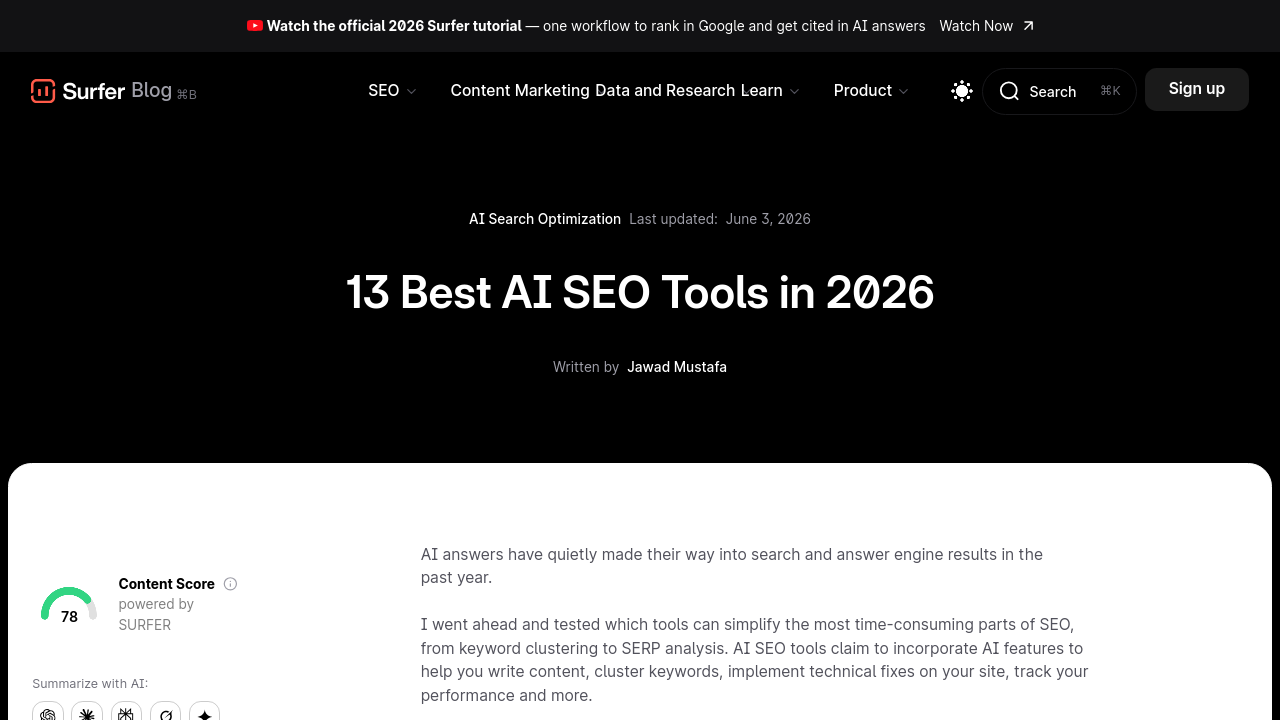
Surfer combines classical SEO tooling with AI visibility tracking in one workflow, which is why it lands at the top for most Web3 teams. Its three headline metrics, mention rate, average position, and visibility score, cover ChatGPT, Perplexity, and Google AI Overviews. The Topical Map feature is the piece I lean on most for crypto sites, because it exposes authority gaps that affect both Google rankings and LLM citation likelihood. Pairing Surfer with a strong Web3 site structure for AI search tends to lift both metrics together.
Who it’s for: teams that want one platform doing content optimization and AI tracking. Weakness: prompt library depth trails Profound for enterprise use.
2. Profound
Profound is the tool I point agency clients toward when they manage multiple crypto protocols. Its prompt and entity tracking runs deeper than most competitors, and the platform is documented as enterprise-grade in both third-party reviews and the vendor’s own materials. For teams that need per-client prompt libraries and competitor benchmarking, this is the closest thing to a purpose-built LLM visibility platform. It also plays well with an AI content automation workflow once you know which entities to reinforce.
Who it’s for: agencies and larger protocols. Weakness: pricing and onboarding overhead exclude early-stage projects.
3. SE Ranking LLM Toolkit
SE Ranking bundles LLM brand mention tracking with a full classical SEO analytics suite: keyword tracking, backlink data, and technical audits. For crypto teams that cannot justify two separate tools, this is the pragmatic pick. Its LLM module tracks mentions and links across multiple AI answer engines, which is useful when you are trying to hold narrative control during a token launch or listing cycle. It also lines up nicely with the tasks in a standard SEO audit checklist.
Who it’s for: small teams doing both SEO and LLM tracking on one budget. Weakness: the LLM module is newer and less granular than dedicated platforms.
4. Peec AI and AIclicks
Peec AI specializes in share-of-voice measurement, benchmarking how often your brand surfaces in AI responses relative to named competitors. AIclicks goes deeper on citation tracking and content gap identification, exposing which sources LLMs cite when your brand does not appear. Both are strong second-layer tools that sit on top of a broader stack, particularly when combined with a disciplined approach to content silos for Web3 that make entity relationships explicit.
Who it’s for: brands that already have classical SEO handled and need dedicated AI visibility depth. Weakness: neither replaces a full SEO platform on its own.
5. LLMrefs
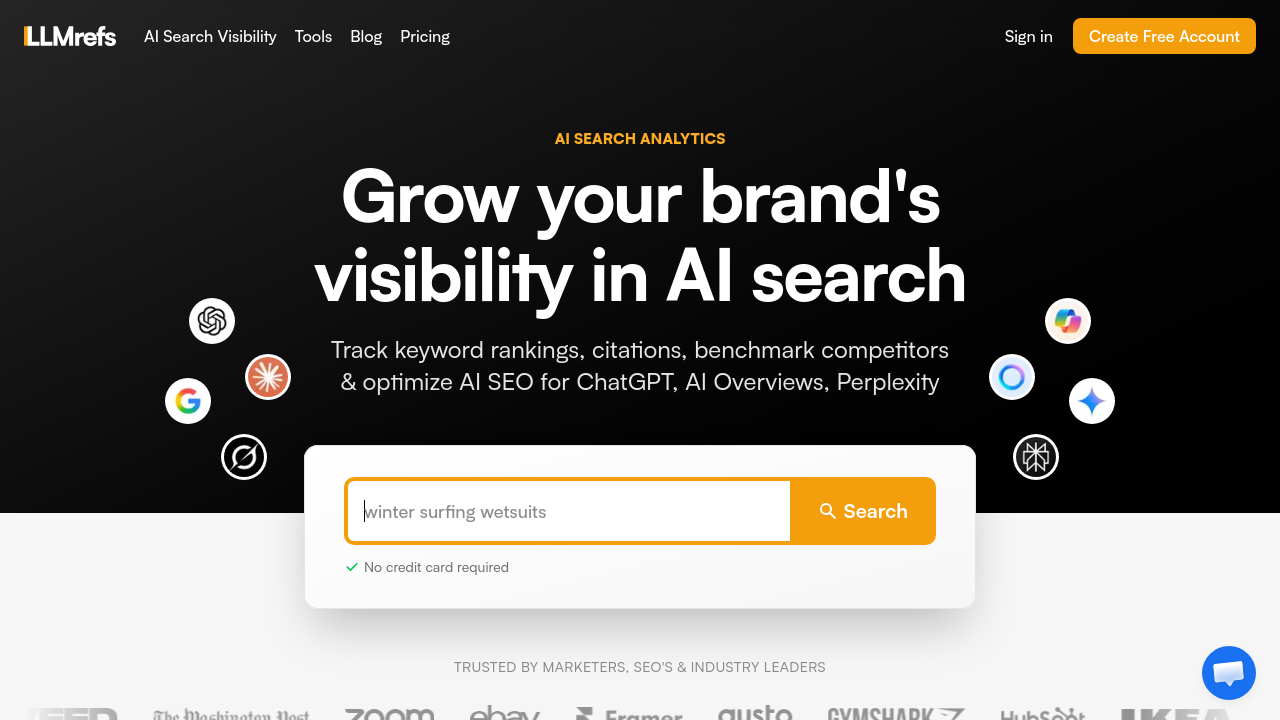
LLMrefs offers free citation monitoring across multiple LLMs and is the sensible first step for early-stage Web3 projects. You will not get prompt library management or competitor benchmarking, but you will see where your brand appears when users ask AI answer engines about your category. Pair it with a solid llms.txt setup for Web3 and you have a workable free stack for the first six months of a project.
Who it’s for: pre-revenue projects and solo founders. Weakness: shallow analytics, no content recommendations.
What to Look for in an LLM SEO Tool for Crypto Projects

Prompt and Query Customization
Generic industry prompts miss the queries that actually convert for crypto brands. You need to monitor token names, protocol mechanics, and ecosystem-specific questions, which means a custom prompt library is non-negotiable. This is also where explaining protocol mechanics, limits, and risks inside your content pays off, because LLMs cite pages that resolve those queries clearly.
Multi-Platform LLM Coverage
User behavior varies significantly between ChatGPT, Perplexity, Gemini, and Claude. A brand can be visible on Perplexity and invisible on ChatGPT for the same query, which is why single-model tracking gives a false picture. Look for tools that read at least three of the four majors and expose the citation URL, not just a mention flag. This maps to the broader argument for a hybrid AI SEO approach that treats each surface as its own channel.
Entity and Topic Extraction
Entity and topic extraction, identifying which concepts LLMs associate with your brand, is the actionable layer. According to a Search Engine Journal discussion on LLM visibility tools, averaging the entities an LLM mentions across thousands of repeated queries is a recognized method for making tracking data statistically meaningful. That is the loop that turns visibility numbers into content briefs and structural updates.
Takeaway: custom prompts, multi-model coverage, and entity extraction separate serious LLM SEO platforms from dashboards. Integration with classical on-page signals like title tags and meta descriptions remains important because LLMs still draw from indexed web content.
Which LLM SEO Tool Capabilities Matter for Each Web3 Use Case
Most Web3 teams buy a tracking platform to answer one of three questions: which AI models cite us, how do they describe us, and which prompts leave us out. Each question needs a different capability, so decide which one you are answering before you compare pricing.
Citation Tracking by AI Model
Citation tracking shows which AI engine, whether ChatGPT, Perplexity, Gemini or Google AI Overviews, cites which of your URLs for each tracked prompt. Look for reporting that splits results by model rather than blending them into one visibility score, because each engine retrieves from different sources and a single average hides where you are missing.
Brand Framing Monitoring
Being mentioned is not the same as being described correctly. Framing monitoring records how a model summarises your product, which competitors it groups you with and whether the facts it repeats are current. For custody, compliance and other trust-sensitive categories, an outdated or wrong description can cost more than no mention at all.
Prompt Gap Analysis
Gap analysis lists the prompts where competitors appear and you do not. It is the most actionable report for content planning, because each gap maps to a page you need to publish or restructure. Tools that pair gap reports with content briefs save a step, but the brief still needs someone who understands the protocol.
Layer 2 and Scaling Solutions
Layer 2 teams compete in comparison-heavy prompts such as rollup comparisons and scaling solution shortlists. Prioritise citation tracking by model and a prompt library built around your architecture terms: sequencers, provers, data availability and finality. For the content and positioning side, see AI search visibility for Layer 2 protocols.
Custody and Institutional Crypto
Institutional buyers ask AI assistants about storage security, regulation and counterparty risk before they contact sales. Framing monitoring matters most here: track how models describe your security model and licensing, then correct inaccuracies on the source pages those models cite. The approach for this segment is covered in AI search for institutional crypto brands.
DeFi and Stablecoin Brands
DeFi and stablecoin prompts shift quickly with yields, pegs and regulatory news, so refresh frequency matters more than prompt volume. Daily or weekly runs on a focused prompt set are more useful than monthly runs on a large one. Stablecoin issuers can find the wider playbook in AI search for stablecoin providers.
NFT and Web3 Consumer Brands
Consumer-facing Web3 brands are compared against mainstream alternatives, not only other crypto projects. Build prompt sets that include non-crypto competitors, or your share of voice will look stronger than it is.
How to Choose the Right LLM SEO Tool for Your Web3 Brand

Match the tool to your stage, not to hype. Early-stage projects with tight budgets should start with LLMrefs to establish a baseline before paying for anything. Agencies managing multiple crypto clients need multi-seat access, competitor benchmarking, and prompt library management, which points toward Profound or Surfer AI Tracker. If your team is content-production heavy, prioritize tools that integrate LLM tracking with content optimization so you do not run two disconnected workflows. Teams building a scalable content operation with AI especially benefit from that integration.
Regulated categories add a layer. Web3 projects in DeFi or tokenized assets should verify whether a tool’s AI-generated suggestions comply with disclosure and legal constraints before hitting publish. Combining a dedicated LLM visibility tracker with a traditional SEO platform tends to give the most complete picture of where a crypto brand appears across blue links and AI-generated results, especially when paired with technical SEO for Web3 and blockchain sites to make sure the underlying content is indexable in the first place.
Takeaway: stage, team shape, and regulatory exposure determine the right tool. Do not buy Profound for a two-person launch, and do not run LLMrefs alone for a Series A protocol.
Final Word
LLM SEO is a young category and the tools reflect that: some are polished, some are duct-taped, none are perfect. For Web3 brands the pragmatic play is to combine a free citation monitor like LLMrefs with either Surfer or SE Ranking for the integrated workflow, then graduate to Profound when scale demands it. For deeper category coverage and reviews of adjacent platforms, browse the directory of Web3 and DeFi SEO agencies I maintain alongside this list.
Frequently Asked Questions
What is an LLM SEO tool and how does it differ from traditional SEO software?
An LLM SEO tool tracks how your brand appears inside AI answer engines like ChatGPT and Perplexity. Traditional SEO software measures Google rankings and backlinks. LLM tools focus on mentions, citations, and share of voice inside generative responses.
How do LLM SEO tools track brand visibility across ChatGPT, Gemini and Perplexity?
Most tools query LLMs through APIs or scraped responses, running your prompts repeatedly and parsing the answers for brand mentions, citation URLs, and entity associations. Aggregated across thousands of queries, the data reveals patterns you can act on.
Are there free LLM SEO tools available for crypto projects?
Yes. LLMrefs offers a free tier for basic citation monitoring across multiple LLM platforms. It is not a full solution, but it is enough to establish a baseline before you commit budget to a paid platform like Surfer or Profound.
Which LLM SEO tools are best for tracking share of voice in Web3?
Peec AI is purpose-built for share-of-voice benchmarking against named competitors, and AIclicks adds citation-source analysis. Surfer AI Tracker also reports visibility scores that function as a share-of-voice proxy inside its broader dashboard.
How often should you run LLM visibility tracking for a crypto brand?
Weekly is a sensible cadence for most projects, with daily monitoring during token launches, listings, or narrative events. Because LLM responses vary by context, higher query volume produces more statistically meaningful trends than one-off checks.
Can LLM SEO tools help with Google AI Overviews as well as ChatGPT?
Yes. Surfer and SE Ranking both track appearances in Google’s AI Overviews alongside ChatGPT and Perplexity. Since AI Overviews pull from Google’s index, classical SEO improvements often lift AI Overview visibility at the same time.
What metrics should Web3 brands monitor in an LLM SEO tool?
Mention rate, average position, share of voice against named competitors, and citation URLs are the four core metrics. Entity associations matter too, because they show which concepts LLMs connect to your project.
Do LLM SEO tools replace traditional keyword rank tracking for crypto sites?
No. LLMs partially rely on Google’s index, so blue-link rankings still drive AI citation likelihood. Run both, and treat LLM SEO tools as an additional layer rather than a replacement for classical rank tracking.
How can you see which content is driving AI citations?
Use a tool that reports the cited URL, not only the brand mention, for each prompt and model. Map those URLs back to your pages, then compare citation changes against the dates you updated content or entity signals. Pages that earn citations show which formats work, so you can apply the same structure to the rest of the site.
How do Web3 brands find the prompts they are missing from?
Run a prompt gap analysis: build a prompt set from real buyer questions, run it across each AI model, and list the prompts where competitors are cited and you are not. Brands with strong Google rankings often find the largest gaps, because AI systems select sources on entity clarity and structure rather than ranking position.


![Victoria Olsina, mentor at R[3]sidency x Construct](https://victoriaolsina.com/wp-content/uploads/2026/10/r3sidency-mentor-victoria-olsina-26239-300x158.png)