Medium is not inherently bad for SEO — but it can limit your domain growth if used as your primary publishing platform.
If you publish only on Medium, the SEO authority benefits medium.com, not your website. However, when used strategically for content syndication with proper canonical handling, Medium can support visibility without harming your rankings.
It can:
Increase short-term visibility
Rank quickly due to high domain authority
Expand brand reach
However, it can also:
Divert authority away from your domain
Pass no link equity due to rel=”nofollow” links
Limit long-term organic asset ownership
Best practice:
Use Medium as a distribution and syndication channel, not as your primary SEO foundation.
What Is Medium in an SEO Context?
Medium is a third-party publishing platform with strong domain authority and built-in distribution. Because it already has significant trust and backlinks, content published there can rank faster than content on newer websites.
For startups and solo creators, this makes Medium attractive for early exposure.
But SEO is not just about ranking individual pages. It is about building long-term domain authority and compounding organic growth on your own website.
That distinction matters.
When Medium Helps SEO
1. Increased Exposure
Medium has a large built-in audience. Publishing there can:
Expand reach beyond your existing audience
Drive referral traffic
Increase brand visibility
2. Strong Domain Authority
Because Medium has high authority, articles can rank quickly — especially for low-competition queries.
3. Strategic Syndication
If you:
Publish on your own domain first
Wait for indexing
Use Medium’s canonical import tool
Link clearly to the original source
Then Medium becomes a distribution channel, not a replacement.
In this case, it supports awareness without competing directly with your root domain.
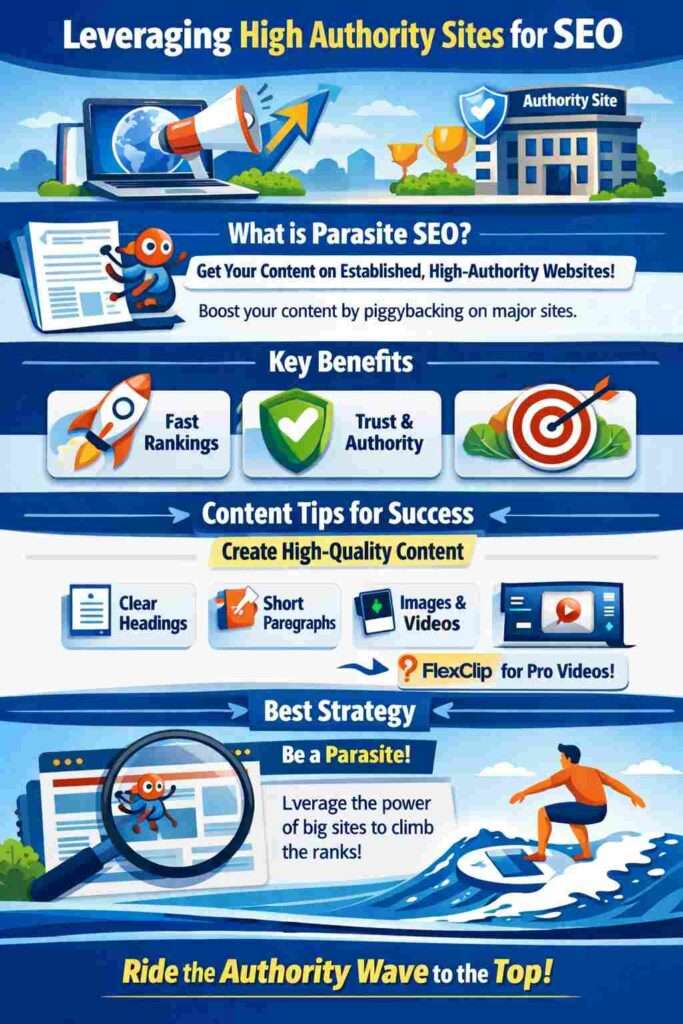
4. Strategic Visibility Layer (Parasite SEO Approach)
The most effective way to use Medium is as a high-authority visibility layer.
Some marketers describe this as a “parasite SEO” strategy — leveraging a powerful domain to rank faster without building authority there.
The objective is not to grow Medium.
The objective is to:
Capture additional search real estate
Rank for long-tail variations
Occupy more SERP positions
Funnel awareness back to your owned domain
When used this way, Medium becomes an auxiliary ranking asset, not your core SEO engine. In my own content distribution strategy, Medium functions strictly as a secondary visibility layer — never as the core SEO asset.
When Medium Hurts SEO
1. You Lose Domain Authority Growth
Publishing exclusively on Medium means:
Backlinks strengthen Medium’s domain
Search visibility builds Medium’s asset
Your website does not compound authority
SEO is cumulative. Medium interrupts that compounding effect if misused.
2. Improper Syndication (Duplicate Content Risk)
If you:
Copy and paste content without canonical setup
Publish on Medium before your own site
Don’t clearly reference the original
Search engines may:
Rank Medium instead of your domain
Consolidate signals toward medium.com
While Google doesn’t “penalize” duplicate content in most cases, it chooses one version as canonical. If that’s Medium, your domain loses the ranking benefit.
3. Links Are Nofollow
Medium applies rel=”nofollow” to outbound links.
This means:
No link equity passes to your site
Authority transfer is limited
Traffic may come through, but ranking strength does not.
4. You Don’t Control the Platform
Medium controls:
Layout
Monetisation
Algorithm changes
Content visibility rules
Long-term SEO requires ownership.
How Google Handles Syndicated Content
Google’s approach to syndicated content is straightforward:
It selects one canonical version.
It consolidates signals to the preferred version.
It avoids showing duplicates in search results.
To protect your rankings:
Publish on your domain first.
Ensure your page has a self-referencing canonical.
Wait until Google indexes it.
Use Medium’s import tool (which sets a canonical to your original).
Clearly link back to the original post.
This ensures search engines understand your site is the primary source.
Medium vs Your Own Website for SEO
| Scenario | SEO Impact | Recommendation |
|---|---|---|
| Primary blog on Medium only | Low domain growth | ❌ Not recommended long-term |
| Publish on your domain first, then syndicate | Neutral to positive | ✅ Best practice |
| Publish teaser with link to full article | Strong referral support | ✅ Recommended |
| Copy-paste without canonical | Ranking conflict risk | ⚠ Avoid |
Verdict:
Medium is a distribution channel. Your website is your SEO asset.
Does Content Quality Matter on Medium?
Yes — possibly even more than on your own site.
Medium’s algorithm rewards engagement, readability, and completion rate.
This entails content that is easy to read, well-structured, and visually appealing. Utilize clear headings, short paragraphs, bullet points, and include multimedia elements like images and videos. Tools like FlexClip can be particularly helpful here, allowing you to easily create professional videos that keep users engaged longer.
Improved readability increases:
Time on page
Scroll depth
Reader engagement
Algorithmic distribution
These factors indirectly influence discoverability.
Can Medium Outrank Your Website?
Yes.
If:
Your domain authority is low
The keyword is competitive
The Medium article is well optimised
Google may rank Medium above your own site.
This creates internal competition where your syndicated version outranks your original.
That is not strategic long-term SEO growth.
Does Medium Cause Duplicate Content Issues?
It can.
If you republish content without using the canonical feature properly, search engines may struggle to determine the original source.
Best practice:
Publish on your own domain first
Wait for indexing
Use Medium’s canonical tool when republishing
This signals your site as the primary source.
When Should You Use Medium?
Medium works well if you are:
Building early brand visibility
Testing content ideas
Targeting a built-in audience
Distributing thought leadership content
Supporting a SaaS or startup awareness strategy
It does not work well if:
You want to build long-term domain authority
SEO is your primary acquisition channel
You want full content ownership and control
Best Practices for Using Medium Without Hurting SEO
If you decide to use Medium, follow this checklist:
✔ Publish on your own website first
✔ Use self-referencing canonical tags
✔ Use Medium’s import tool (not manual copy-paste)
✔ Add a clear link to the original source
✔ Treat Medium as distribution, not your main blog
✔ Track referral traffic with analytics and UTM parameters
Is Medium Bad for SEO for Crypto Startups?
For crypto startups, Medium is not inherently bad for SEO — but it should never be your primary content hub.
In the crypto seo space, organic search visibility is highly competitive and trust-driven. If you publish only on Medium:
You build authority for medium.com, not your crypto domain
You miss the opportunity to rank for high-intent keywords like:
“best crypto wallet”
“how staking works”
“Layer 2 scaling explained”
You reduce your ability to build topical authority in blockchain, DeFi, or Web3 niches
Over time, this weakens long-term SEO growth.
Why Many Crypto Projects Use Medium
Medium is popular in crypto because:
It’s easy to launch quickly
It’s widely used in Web3 communities
It’s commonly used for token announcements, roadmap updates, and technical explainers
Many investors expect projects to have a Medium presence
From a communications standpoint, this makes sense.
From an SEO standpoint, it’s incomplete.
The SEO Risk for Crypto Startups
Crypto startups often rely on:
Educational content
Technical documentation
Ecosystem updates
Tokenomics explainers
Security transparency
If all of this lives on Medium:
Your domain builds no topical authority
Your brand loses search equity
Your site struggles to rank for non-branded terms
You rely heavily on social and community distribution
In crypto — where trust and authority are critical — owning your content infrastructure is essential.
Best SEO Strategy for Crypto Startups Using Medium
If you’re in Web3, DeFi, or blockchain:
Host your main blog on your domain
Publish core SEO content (guides, explainers, educational articles) there first
Use self-referencing canonical tags
After indexing, republish selectively on Medium using the import tool
Add clear attribution linking back to the original article
Use Medium for:
Community updates
Announcements
Distribution
Thought leadership amplification
But build SEO authority on your own domain.
Final Verdict
Medium is not “bad” for SEO.
It becomes harmful only when:
It replaces your website
It competes with your original content
It is misused without canonical strategy
Used correctly, it is a distribution tool — not an SEO engine.
Your website should always be your primary SEO asset.
Medium should support your SEO strategy, not define it.
FAQ: Medium and SEO
Is Medium bad for SEO?
No. It becomes harmful only when it replaces your primary domain strategy.
Should I host my main blog on Medium?
No. Long-term SEO requires domain ownership and authority building.
Does Medium pass link authority?
No. Links are marked nofollow.
Can Medium improve traffic?
Yes. It can increase referral traffic and brand visibility.
Is Medium good for personal branding?
Yes. It is strong for exposure and audience building.


![Victoria Olsina, mentor at R[3]sidency x Construct](https://victoriaolsina.com/wp-content/uploads/2026/10/r3sidency-mentor-victoria-olsina-26239-300x158.png)