TLDR
- Using a custom Content Management System (CMS) can often be inaccessible and negatively affect efficiency, technical seo, and cause wider SEO issues.
- One-page websites restrict how many keywords a website can rank for and provide very little context or information about the business’s product or service. Websites should focus on one keyword/topic/theme per-page in order to improve rankings on Google.
- Brand-focused content limits the number of new customers that will find you, especially if you are a new company. Startups need to focus on keywords which reflect their services or products.
- Subdomains split the equity of the original domain, meaning that it is harder for a website to rank. Avoiding subdomains (when possible) means that a website will receive 100% of its link equity, which will help with ranking for keywords.
- Using platforms such as Medium means that a website misses out on any backlinks that the Medium article receives. This can be corrected by using the “import story” feature which uses a canonical tag which tells Google to rank your content over Medium.
I have a personal theory that many developers in the blockchain and crypto space dislike Google’s centralised omnipotent power to such an extent, that they have simply abandoned the task of having their website rank on it.
Whilst I respect committed political views, I’m unsure how we’ll drive the blockchain revolution and enable my mum, Marina, living in a Alta Gracia (a lost town in Argentina and also the former home of Che Guevara), to pay for her groceries in USDT whilst promising startups that offer a wallet a would enable that service are ranking in position 87 on Google.
I’ve worked in the digital marketing and SEO industry for over 10 years. After 4 years of optimising dozens of websites in the blockchain and crypto space, I’ve come across 5 common crypto errors:
Watch the webinar “Crypto SEO: Top 5 Web3 SEO mistakes (and how to fix them)”
Understanding Web3 SEO fundamentals is essential.
1. Hubris: I’m too special to use a CMS.
Hubris in Greek tragedy represents excessive pride toward or in defiance of the gods, leading to nemesis. In modern times, we refer to the generation that embodies hubris as millennials, and they are the opposite of practical.
Many Web3 developers believe that their projects or services are too unique to be displayed using a pre-made content management system (CMS) like WordPress, Joomla, or Drupal. These platforms are used by more than 40% of the websites on this planet—including SaaS companies—and are proven to be modular, scalable, functional and a strong choice for small and medium-sized companies.
However, some Web3 developers view these CMS platforms as outdated technologies from the “Web 2.0” era and believe that they are not suitable for use in the blockchain revolution. So they spend too much time and money trying to reinvent the Web on a tiny project, ignoring content marketing opportunities.
From a practical perspective, using a complicated CMS means that it is often inaccessible to people who are not devs. Therefore, any minor change that you need to make, such as to metadata, meta descriptions, or creating a new page, is turned into a long drawn-out process of waiting for a dev to pick up the ticket.
I experienced this first-hand whilst working with a decentralised finance client who used a custom CMS built on React, which the marketing team could not access – meaning they couldn’t even build content to help sell their product!
To put it simply, if TechCrunch and The New Yorker use WordPress, your website can too.
Most of the websites I have worked with correspond to very early-stage projects. These lightweight landing pages are either made up of one long page in the worst-case scenario (see One-Pagers below), or three to five HTML pages in the best-case scenario, often ignoring site speed and mobile optimization.
Scarce lines of text, lean Scandinavian-looking silhouette icons, an animation video embedded from YouTube and a sign-up form for their newsletter.
Those are the basic components of the average Dapp-in-the-making website, which is likely to have a Greek name such as Avocadium and that aims to fix the broken economic system and promote financial inclusion by delivering avo on toast.
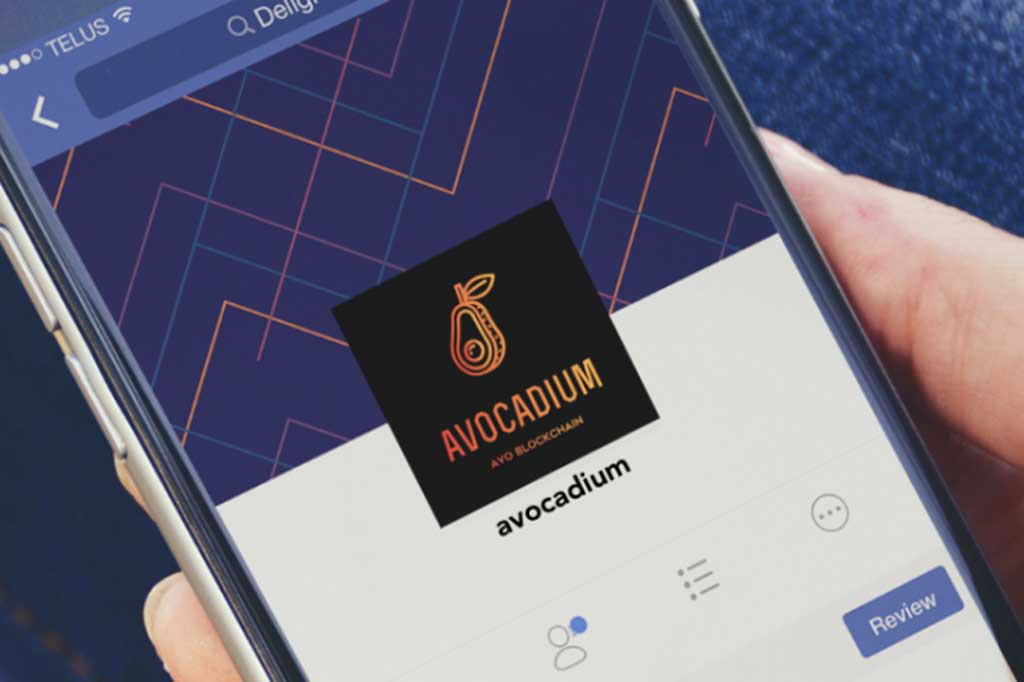
I honestly don’t think you need to reinvent the web for Avocadium.io, and you won’t. However, many new startups keep making the same mistakes of creating a complicated CMS.
How does the lack of CMS affect SEO? Hubris unravels the next three items of the SEO apocalypse, including poor user experience.
2. One-pagers
Let’s talk about one-pagers by using our disruptive project, Avocadium, as a hypothetical example.
Avocadium.io doesn’t have a minimum viable product (MVP) yet and is looking for investors. The plan is to build the simplest possible website without a CMS (because WordPress and Joomla are so Web2.0), containing the following items:
- The two products it offers are avocado blockchain for the people (p2p) and avocado enterprise.
- One page for social impact showing how Avocadium.io is helping to solve global hunger.
- The Team: one veteran from the avocado industry who decided to quit the greedy bonus fuelled big corporation to make the world right (we still don’t actually know his true motives). Three 21-year-old developers out of university, all white males being underpaid, with one token woman designer (who’s underpaid even more), and a token Asian guy in business development for good measure.
- Documentation/white paper.
- Contact form.
The SEO-friendly way to approach this project is to create a homepage that describes the main value proposition with links to a new page for each topic addressed using proper internal linking. Why? Because each page gets optimised for a particular set of keywords.
For example, in this case:
- Homepage targeting keywords “avocado blockchain solutions”
- Enterprise value proposition page targeting “enterprise avocado blockchain”
- Developer documentation page targeting “how to build on Avocadium,” and “Avocadium development”
HOWEVER – there is usually a skimpy one-pager with less than 400 words that jams all of the information from all of the sections into one place whilst barely explaining what the product or service is or addressing customer pain points.
With this, you can only expect to rank for only one keyword, and certainly not drive the decentralised revolution of Web3. Google, your mum’s version of the Internet, doesn’t like it.
The Golden Rule is one keyword per page and one page per topic, creating effective content clusters.
If you offer 3 products or services, then have one dedicated page for each of them. Unless you are only trying to rank for one keyword. For example, if your sole keyword is “avocado blockchain,” I wouldn’t recommend using a one-pager.
So far, I have never seen any blockchain startup that only needs one page. More examples of this are in the next point.
Another reason to avoid the one-pager is that your business (if it’s successful) will hopefully expand. Therefore, your one-pager will need to scale from 1 to 5, to 10, to 25, to 100 pages.
This simply cannot be achieved in a sustainable way without a CMS or a proper front-end developer team.
The first option is the most practical and cost-effective until the Avocadium tokens hit the USD 300 value, which may never happen.
3. No Keywords in the title, just the brand. SaaS SEO lesson #1.
Another example of hubris (or SEO cluelessness) is that startups focus on their brand before the product.
Unless you are a renowned corporation like Coca-Cola or Apple (which you’re probably not) – you need to tell your audience what your company does and what you are selling. You can achieve this by targeting the keywords that your audience is using.
How do I target the right keywords for my startup?
Keywords are the foundation of the Web. People use keywords to verbalise a problem to Google. This is why keyword research is essential.
If you’re struggling to find the right keywords, start by verbalising your product/service value proposition, i.e., how would people search for you on Google without using your brand name?
In our case, for Avocadium the keywords would be something like “blockchain avocado.”
Now check if there is demand for it by using these free tools: Keywords Everywhere, Keyword tool, Google Keyword Planner, and Ubersuggest. For deeper insights, upgrade to paid tools like Ahrefs or Semrush.
When I was working at ConsenSys, an Ethereum-based company – I focused on the keywords which best described us such as “Blockchain Technology Solutions” and “Ethereum Solutions”.
Therefore, the meta title of our home page was “Blockchain Technology Solutions | Ethereum Solutions | ConsenSys”.
We made sure that each page targeted a unique keyword which represented the product ConsenSys was offering:
“Blockchain Venture Capital and Token Sale Advisory,” “Blockchain Social Impact,” “Smart Contract Audit,” “Enterprise Blockchain Solutions,” etc.
By taking the product-focused approach, we were able to outrank competitors such as IBM and Deloitte in addition to growing organic traffic from 0 to 24,000 in less than a year. This built our topical authority.
4. Using subdomains negatively affects ranking
Avocadium.io has just one long page and the team lacks the ability to easily create new pages due to not having a CMS. Therefore, the ever-expanding functionality of this website will now sit on a subdomain. That means developer documentation, APIs, blogs, and anything that needs to live outside of the homepage, will now sit on a subdomain.
Many popular services such as Github, HubSpot (formerly Medium), etc., offer a paid subscription to customise a URL on their platform. Avocadium’s blog hosted on “medium.com/avocadium” could be now part of the “Avocadium.io” website if purchased, like this:
“Blog.avocadium.io”
However, this approach is problematic for SEO. Every time you create a subdomain, you split the SEO equity of the original domain. Why is that? Because Google treats each subdomain as a new website, meaning the backlink juice that you have worked hard to acquire with sweat and tears will not be passed into the new subdomain.
The SEO equity dilutes, the dream is over.
As Google sees it, “avocadium.io” and “blog.avocadium.io” are two different websites.
On the other hand, if you had “avocadium.io/blog” (instead of “blog.avocadium.io”), you consolidate every page into one domain. This is good for SEO.
Bad SEO (a waste of time) and splitting the SEO equity of your website looks like this:
https://api.avocadium.io
https://docs.avocadium.io
https://blog.avocadium.io
Good SEO (time well spent) consolidation of SEO equity, and happiness forever looks like this:
https://avocadium.io/api
https://avocadium.io/docs
https://avocadium.io/blog (Core Web Vitals optimized)
A modular CMS with plugins and extensions makes it quite easy to expand the functionality of Avocadium.io. WordPress, for example, has many free documentation plugins that help with link building and XML sitemap creation.
Now please note that Google has stated that they treat subfolders and subdomains instinctively, however, many SEO experts disagree (and fight on Twitter over this). Check your search volume and zero volume keywords.
For example, whilst I was working at Barclays Bank, by moving a subdomain into a subfolder the traffic increased by 47%. All it took was changing:
help.banksname.co.uk (avoid javascript rendering issues)
to
banksname.co.uk/help
and the traffic started rolling in. Essential for conversion tracking and user signals.


Beyond the SEO drawbacks, multiple subdomains mean that you have to do twice the work when it comes to analysing the health and analytics of the website when using programs such as Google Search Console, GA4, Semrush, checking for crawl errors, monitoring bounce rate, etc.
5. Medium as a Blogging platform. Avoid these bottom funnel SEO mistakes.
This is the cherry on top of the non-CMS patching experiment. SaaS companies make these SEO mistakes constantly.
Web3 developers often despise centralised big tech corporations like Facebook and Google, as they misuse people’s data and privacy to add money to their own products.
Despite appearing as a trendy way to market a product, Medium does the same with your content. What originally began as a practical, open, friendly and hassle-free platform for writers, has now become the Facebook of content. Perfect for fintech SEO disasters.
Worst of all, anything your dev team publishes on Medium – belongs to Medium (unless you have a custom domain, which is a feature Medium grandfathered in 2017) If your content belongs to Medium, all the SEO equity you could get from it with backlinks and mentions does too. Use proper anchor text instead.
To avoid this, some developers have started using the “import story” feature, which adds a canonical tag from the article to your website. This tag tells Google which version of your content to rank and sends all the SEO value to the right place.
The canonical tag tells Google which of the several versions of your content is the one that they should rank and send all the SEO equity to. This prevents keyword stuffing and builds semantic SEO.
To play the game with Medium, publish the article, “How Will Avocadium Will Change The Map Of World Hunger.” on your website first. “Then import the story on Medium. This way the canonical tag on Medium will point to your website. All the backlinks are yours.
For example, the original URL:
avocadium.io/blog/how-will-avocadium-change-the-map-of-world-hunger
Medium URL:
medium.com/avocadium/how-will-avocadium-change-the-map-of-world-hunger
Canonical pointing to original URL:
avocadium.io/blog/how-will-avocadium-change-the-map-of-world-hunger
With the canonical tag method, Medium doesn’t get credit for your content, meaning your website receives the SEO juice for your hard-earned work, and you get the Medium claps which is a form of validation within the blockchain ecosystem.

You can read more about canonicals on these wonderful Moz’s article from where I borrowed this image.
Why is Medium bad for SEO?
- The title tag and H1 are the same (the name of the article) they can’t be customised. This is one of the bad SEO practices that hurts rankings.
- The title tag can’t be changed after publishing.
- Can’t write a custom meta description, it’s always the first two lines of the article. Optimize for user intent and long tail keywords instead.
- URLs append ugly alphanumeric codes as a default suffix. Clean URLs are crucial for product pages and overall SEO.
- Beyond screwing up your SEO, how annoying is it to be offered to download the app every time you open a Medium article on a mobile phone, or just simply not being able to read anything at all on your desktop without being logged in to Medium? Cross-platforming affects UX, Core Web Vitals, and a poor experience can lead to lower rankings.
- The lesson here is: don’t use Medium. Have a blog instead, it will be yours forever. Obviously, to do this, you need a website that allows you to have more than one page, where you can have blog functionality. Good luck building this from scratch without a CMS.
Crafting the perfect website is more than simply understanding and excelling at the industry work in blockchain. There are many technical elements outlined above that can make or break your success with organic search.
Consider all of these simple SEO tips when you think about producing a website. SaaS companies like Chime, Chase, and SoFi use tools like Google Search Console, Screaming Frog, GA4, and Similarweb to succeed. The blockchain world domination, Avocadium.io solving worldwide hunger, and my mum paying for her groceries with USDT depend on it.
If you like this post, you can share it or follow me on Linkedin and Twitter – I post insights and tips (almost) every day on Reddit, Quora, and more, including bo fu content and YMYL topics. If you didn’t like it – don’t say anything. Check out Sure Oak or Passionfruit for more SEO help.
Several of these mistakes show up most often in crypto SaaS products, where the marketing site and the app are built by different teams. Victoria Olsina works on crypto SaaS search visibility for companies in that position.
Frequently Asked Questions
Frequently Asked Questions
What are the Top 5 SEO mistakes by Crypto & SaaS websites (and how to fix them)?
The Top 5 SEO mistakes commonly made by Crypto & SaaS websites include: 1) Ignoring mobile optimization, 2) Keyword stuffing without user intent, 3) Slow page speeds due to heavy scripts, 4) Poor internal linking structures, and 5) Neglecting HTTPS and security signals. To fix them: Optimize for mobile-first indexing, focus on semantic search with tools like Google Keyword Planner, compress images and use CDNs for speed, build logical silo structures for linking, and implement SSL certificates with regular security audits.
Why do Crypto & SaaS websites often make these Top 5 SEO mistakes (and how to fix them)?
Crypto sites prioritize flashy designs and real-time data, while SaaS focuses on feature-heavy pages, leading to overlooked SEO basics. Fixes involve conducting SEO audits with tools like SEMrush or Ahrefs, prioritizing Core Web Vitals, creating content clusters around user queries, ensuring E-A-T (Expertise, Authoritativeness, Trustworthiness) for crypto’s regulated space, and A/B testing changes for measurable improvements.
How can Crypto websites avoid the Top 5 SEO mistakes (and how to fix them)?
Crypto sites falter with thin content and duplicate blockchain pages. Avoid by producing in-depth guides on topics like DeFi or NFTs, using schema markup for rich snippets, fixing crawl errors in Google Search Console, building backlinks from reputable finance sites, and monitoring for algorithm updates like Helpful Content Update.
What are the impacts of the Top 5 SEO mistakes by SaaS websites (and how to fix them)?
SaaS sites suffer high bounce rates from unoptimized funnels and generic landing pages. Impacts include lost conversions and low rankings. Fix by personalizing pages with dynamic content, improving dwell time via interactive demos, leveraging long-tail keywords like “best CRM for startups,” optimizing for voice search, and integrating analytics for ongoing tweaks.
How to quickly fix the Top 5 SEO mistakes by Crypto & SaaS websites (and how to fix them)?
Quick wins: Run a site speed test with PageSpeed Insights and lazy-load assets, audit meta tags for uniqueness, submit updated sitemaps to Google, diversify anchor text in links, and use tools like Screaming Frog for broken links or 404s. Track progress with position tracking in rank trackers.
Which tools help identify the Top 5 SEO mistakes by Crypto & SaaS websites (and how to fix them)?
Essential tools: Google Analytics for traffic insights, Search Console for indexing issues, Ahrefs for backlink audits and keyword gaps, GTmetrix for performance, and Moz for on-page optimization scores. Combine with manual reviews to address niche issues like crypto’s volatility in search trends. For professional guidance, consider working with a crypto-specific SEO tactics.


![Victoria Olsina, mentor at R[3]sidency x Construct](https://victoriaolsina.com/wp-content/uploads/2026/10/r3sidency-mentor-victoria-olsina-26239-300x158.png)