Crypto products are among the hardest product categories for AI systems to understand and recommend — not because AI systems are incapable, but because crypto products have structural features that
This category focuses on SEO strategies designed specifically for Web3 marketing teams. Content covers how organic search supports growth, credibility and demand generation for crypto, blockchain and DeFi projects, where paid channels are often restricted. Topics include Web3-native keyword strategy, content systems, technical SEO for complex products, and how SEO integrates with broader Web3 marketing efforts, including AI search and LLM visibility.

Crypto products are among the hardest product categories for AI systems to understand and recommend — not because AI systems are incapable, but because crypto products have structural features that

Not all traditional crypto SEO is obsolete in the AI search era. These fundamentals still drive visibility, and some matter more than ever.

Ranking first on Google does not guarantee AI visibility. Why crypto brands with strong rankings stay invisible in ChatGPT, and how to fix it.

Measuring AI search visibility for a crypto project is harder than measuring Google rankings — there is no universal leaderboard, results vary by platform and by day, and the metrics

Web3 teams cannot hand-produce LLM-ready content at scale. The automation system that turns one source into consistent AI-visible content across platforms.

Not all crypto channels build AI visibility equally. Learn which platforms drive LLM recommendations and which ones waste budget, ranked by impact.

Crypto projects spend significant budget on PR and see minimal impact on AI search visibility. This is not because PR is useless — it is because most crypto PR is

Web3 brands describe themselves differently everywhere they exist. The GitHub README uses technical language. The Twitter bio uses hype language. The docs use category language. The blog uses narrative language.

Token launches and funding announcements build human attention but not AI trust. Learn what authority signals AI systems actually use to recommend Web3 brands.

AI systems hedge when content is unclear. If your crypto brand gets cautious AI recommendations, here is why and how to fix it.

Most crypto protocols are explained incompletely on their own websites. Mechanics exist in docs, limits are buried in FAQs, and risks are avoided entirely. AI systems need all three to

Crypto content has a language problem that directly destroys AI search visibility. The industry defaults to hype language — revolutionary, next-generation, ecosystem, paradigm shift — that means nothing to AI

Web3 marketing teams respond to AI invisibility the same way they respond to every visibility problem — they publish more content. More blog posts, more explainers, more threads, more announcements.

Content silos for Web3 explained: how to design topic clusters that build authority, improve LLM visibility, and turn scattered posts into a ranking system.

Web3 teams design site structures for users. Pages flow logically from marketing to product to docs to blog. The journey makes sense to a human. To an AI system, it

A site can rank on Google and still be invisible to ChatGPT, Perplexity and Google AI Overviews, because LLMs read sites differently from search engines.

Server-side rendering is not a performance optimisation for crypto sites: it is an AI visibility requirement. Here is why and how to implement it.

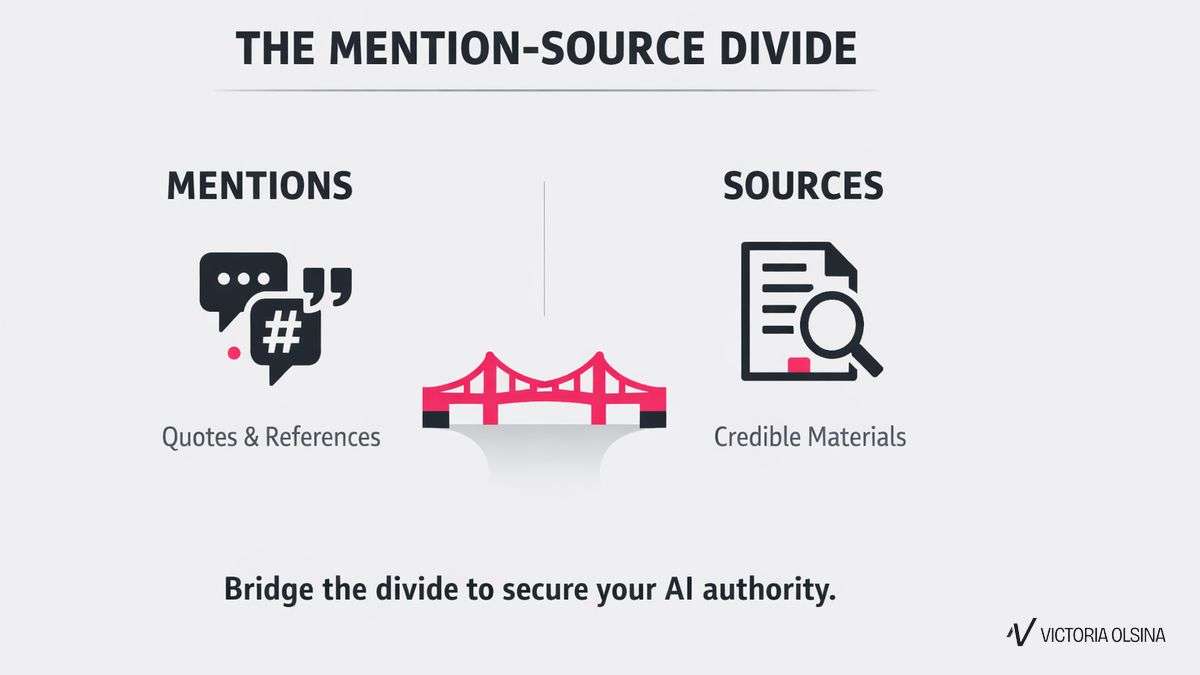
Citations, mentions and rankings are different signals. How AI systems use each one when recommending crypto brands, and which to prioritise first.

Most Web3 dApps are invisible to AI systems before a single word of content is ever evaluated. The issue is JavaScript rendering — and for most Web3 teams, it affects

Most Web3 brands are invisible in ChatGPT and Perplexity not because they lack content, but because LLMs cannot classify them. Here’s the exact fix.

Crypto projects often resist category definition because they feel their product transcends existing labels. This is understandable. It is also one of the most expensive visibility mistakes a Web3 brand

Web3 marketing teams are trying to apply traditional SEO thinking to AI search and finding it does not work. The mechanics are different, the signals are different, and the content

Web3 teams build products AI systems cannot read. The fix is not more content: it is one clear explanation page that machines can find, extract, and trust.

Most Web3 sites are invisible in ChatGPT not because they lack content but because they fail basic technical requirements that AI systems need before they can extract, classify, or recommend

Most Web3 brands describe their product differently on every page they own. The homepage says one thing, the docs say another, the blog says a third. AI systems cannot work

Web3 brands invest heavily in content and still fail to appear in AI-generated answers. The reason is not effort or budget — it is that AI systems require clarity, structure,

Most Web3 founders assume their product is visible in AI search because they have content. The real test is whether an AI system can explain what you do without guessing.

Most Web3 brands optimise for rankings and citations but never appear in AI-generated answers. The problem is not search engine performance — it is that citations and mentions are two

The reason most Web3 brands are invisible in ChatGPT is not lack of content, it is lack of structure. AI systems cannot explain what they cannot clearly classify, verify, and

Today I’m excited to share something I’ve been working on for a while, my book Mastering AI Search for Crypto & Web3 Brands, From SEO to GEO: How to Appear