Most SEO speakers sound credible until they open the slide deck. The gap between someone who understands search and someone who can teach it to a room is wider than most event organisers expect. This guide covers the criteria that actually matter when choosing an SEO speaker in London: technical depth, audience fit, delivery track record, and whether they are keeping pace with AI search.
What to Look For in an SEO Speaker

A credible speaker has to hold three pillars at once: technical SEO, content strategy, and how search behaviour is shifting under ChatGPT, Perplexity and Google’s AI Overviews. Miss one pillar and the session dates itself inside a quarter.
Victoria Olsina judges speakers on failure cases first. The strongest ones open with a broken assumption or a client that lost traffic, then walk through what they changed. That is real-world experience. A curated highlight reel is a portfolio, not a lesson.
Technical Depth vs. Surface-Level Coverage
Surface-level speakers talk about “quality content” and “user intent” without ever touching a log file. Depth shows up when a speaker can explain crawl budget, rendering, internal link equity, and how an LLM parses your page. If you want a concrete reference for what that depth looks like on the vendor side, the criteria she uses for a technical SEO agency for Web3 brands translate cleanly to picking a speaker.
Audience Fit: Executives, Marketers, or Developers
A room of CMOs needs board-level framing: pipeline, share of AI answers, reporting narratives. A room of in-house marketers needs workflows. A room of developers needs schema, Core Web Vitals, and rendering trade-offs. One deck cannot serve all three. Ask the speaker how they adapt.
Practical Frameworks, Not Just Theory
Frameworks the audience can apply the following Monday are the differentiator. Trend overviews rarely produce measurable change. The frameworks Victoria Olsina relies on for AI SEO content and AI agent-driven visibility work because they turn abstract shifts into a checklist the team can execute.
Takeaway: a good speaker leaves attendees with three things they will do this week, not three slides they will forget.
Top Picks: SEO Speakers Available in London

London’s SEO speaker market splits into two shapes. Keynote specialists handle 200-plus rooms with one strong argument. Workshop trainers work with groups of 10 to 50 and go deep on the audience’s actual sites. Book the wrong shape for your format and even a great speaker will underdeliver.
Keynote Specialists vs. Workshop Trainers
Keynotes are argument-driven. Workshops are exercise-driven. Different craft, different prep, different fee.
- Amo Sokhi has delivered sessions to audiences ranging from 5 to 500, and earned an 83% ‘Excellent’ speaker rating at the TTG Luxury Travel Seminar. Strong fit for mixed marketing rooms.
- Itamar Blauer, author of Keywords for SEO and host of the SEO Unplugged podcast, runs hands-on B2B SEO training in London. His 3.5-hour session at The Ministry, Borough starts at £549+VAT and includes live website reviews.
- Lukasz Zelezny (SEO.London) is cited on Trustpilot as a respected keynote speaker and SEO consultant ranked among the top UK marketing influencers. Comfortable at large-format keynote scale.
- Eva Mermingi brings eight years of agency and independent technical SEO experience to speaking and mentoring engagements in the UK.
Independent Consultants vs. Agency-Backed Speakers
Independent consultants tailor content directly to a single brief. Agency-backed speakers often bring broader case-study depth, but the format is less flexible and the fee carries agency commission. If your brief is narrow, go independent. If your brief is generic and your audience wants brand-name signalling, an agency-backed speaker can pay off.
Takeaway: pick the format first, the person second. A keynote specialist in a workshop slot is a bad session for everyone.
Evaluating a Speaker’s Credentials
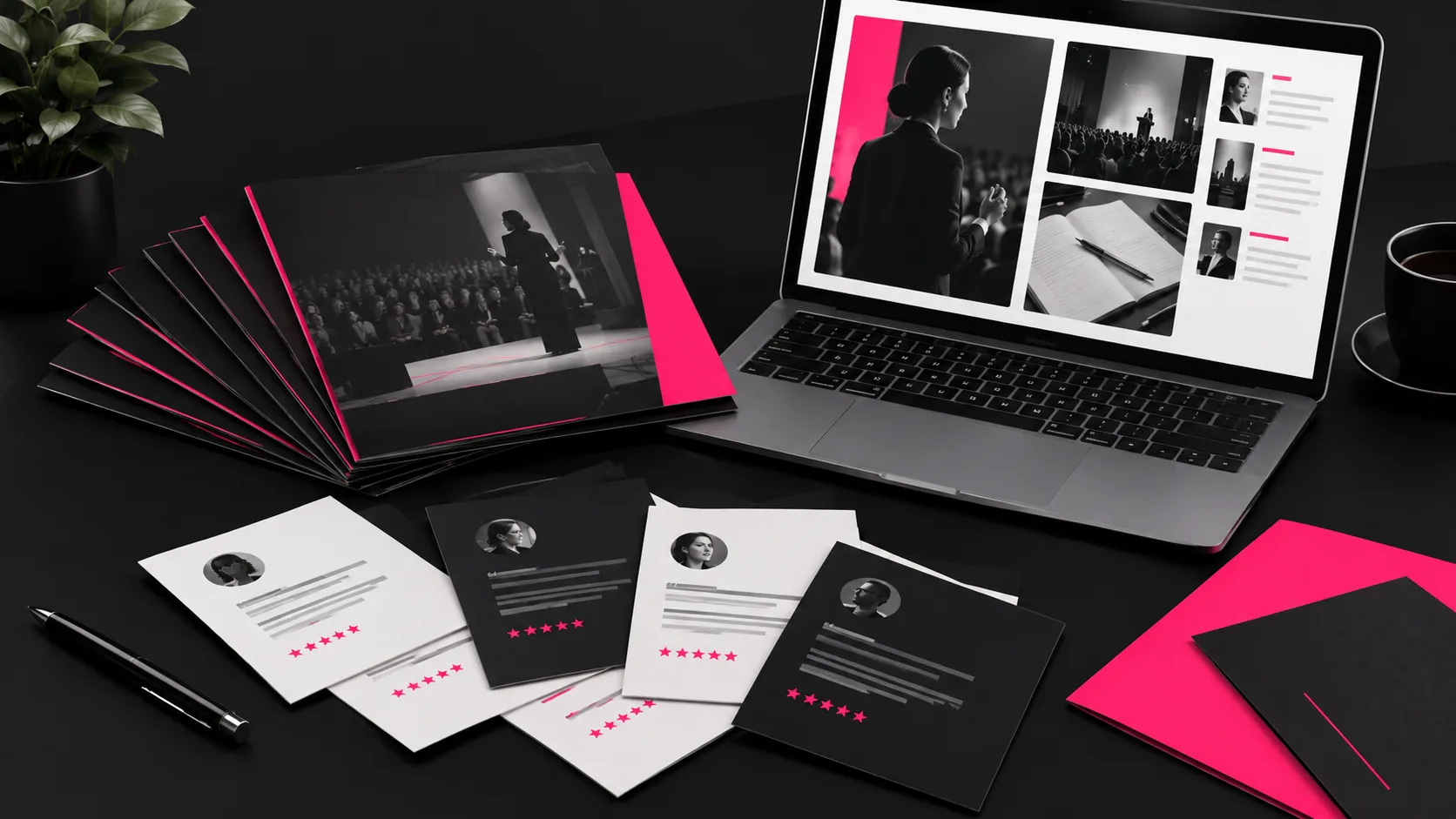
Testimonials are decoration. Verifiable ratings, named event appearances and published output are evidence.
Published Track Record and Verifiable Ratings
Look for speakers who publish consistently: books, podcasts, articles, conference decks on SlideShare or personal sites. Public output means their thinking has been stress-tested. Independent event ratings (like the TTG 83% figure above) beat unverified five-star reviews on a bio page.
Ask for a video recording of a previous session before booking. Delivery quality and audience engagement are impossible to assess from a written bio. If they cannot produce one, that is a signal. The SEO speaker page is a useful benchmark for the kind of format and topic transparency a credible speaker should publish upfront.
Relevance to the Current Search Environment
A speaker who cannot explain how AI Overviews, large language models and zero-click search affect organic traffic in 2025 and 2026 is working from an outdated model. Ask them directly: what percentage of your recent client work involves optimising for AI answer surfaces? If the answer is vague, move on. The mechanics of ranking inside LLM answers are meaningfully different from classical ranking, and speakers who have not adjusted their thinking will teach the room a stale playbook.
Red flag: a bio that references events from more than three years ago with no recent appearances.
Takeaway: three checks before booking. Recent talk video. One piece of published thinking from the last twelve months. One named client or event with a verifiable outcome.
Matching the Speaker to Your Event Format
Format dictates preparation. Confuse the two and even a strong speaker looks flat.
Conference Keynotes
A keynote slot (20 to 45 minutes) needs a speaker who can build one memorable argument and defend it. Not five tips. One argument. The room should be able to repeat the thesis in the coffee break.
Internal Team Training
Internal training works when the speaker tailors content to the company’s actual site, sector and current search challenges. Generic curriculum wastes the budget. The B2B Marketing Expo model, where a pre-event questionnaire lets Itamar Blauer build examples around real submitted websites, is worth replicating whenever you brief a trainer. If your team’s remit sits closer to SaaS or fintech, the shape of the brief in her SaaS SEO founder guide and choosing a fintech SEO agency breakdown maps directly to what a good trainer will ask for.
Panel Discussions and Roundtables
Panels need speakers who can respond to unprepared questions clearly and hold a precise point of view without falling back on “it depends”. If a speaker has never held a strong opinion in public, a panel will expose it.
Budget varies widely. A half-day workshop from an independent consultant typically costs less than a branded keynote booked through a speakers’ agency, where fees include commission.
Takeaway: brief the speaker on format, room size, seniority and outcome before you ask for a fee. A speaker who quotes without that context is pricing a template.
Red Flags and What to Avoid
Outdated Thinking Dressed Up as Authority
Avoid speakers who still frame SEO as a keyword-volume exercise. Entity-based search, AI-generated results and refined intent signals now shape what actually ranks. A speaker who ignores this is teaching a 2018 model with 2026 dates on the slides. The B2B SEO consultant buyer’s guide covers the same trap on the consulting side and is worth reading before you brief a speaker.
Speakers Who Cannot Go Off-Script
A speaker who deflects technical questions to “it depends” without a concrete framework will give the audience nothing actionable. Test them with a specific question during the scoping call. If they cannot answer, the session will follow the same pattern.
Other red flags worth writing down:
- Testimonials with no named client, event or date.
- Booked solely through a large agency with limited pre-event briefing access.
- A speaker whose own website or LinkedIn profile has obvious SEO problems. If they cannot get on-page SEO right on their own domain, do not hand them a microphone.
- No mention of AI search anywhere in recent talks.
Takeaway: red flags compound. One is a question. Three is a pass.
How to Choose the Right SEO Speaker for Your Brief
Start with the outcome. What should attendees do differently after the session? Work backwards from that to the speaker’s demonstrated expertise. If the outcome is “our marketing team ships better briefs”, the speaker needs workshop skill. If it is “our board understands why organic traffic dropped 30%”, the speaker needs executive framing.
A short checklist Victoria Olsina uses:
- Request a 15-minute scoping call. Any speaker who skips this and sends a generic proposal is not tailoring content.
- Match technical depth to audience seniority. CMOs need strategic framing; SEO executives need tactical depth.
- Verify current thinking covers AI search, not just Google ranking factors. The two now require different strategies in 2025 and 2026.
- Ask for two or three references from event organisers, not just attendees. Organisers can speak to reliability and whether the speaker delivered what was agreed.
- Confirm the pre-event briefing process in writing.
If you want a reference point for what a well-scoped SEO engagement looks like end to end, the Consensys Web3 SEO case study shows the level of specificity a good speaker should be able to talk to on stage.
The best speaker for your event is the one whose demonstrated work most closely matches the outcome you need. Rankings and rate cards are secondary.
Closing
Choosing an SEO speaker in London comes down to fit, not fame. Match the format, verify the credentials, and pressure-test the thinking on AI search before you sign anything.
FAQ: Frequently Asked Questions
How much does an SEO speaker in London cost?
A half-day independent workshop typically starts in the low four figures. Agency-booked keynote fees run higher because they include commission. Itamar Blauer’s public B2B training at The Ministry starts at £549+VAT per attendee ticket.
What topics should an SEO speaker cover in 2025 and 2026?
Technical SEO fundamentals, entity and intent-based content, and how AI Overviews, ChatGPT and other assistants change organic traffic and reporting. If AI search is missing from the agenda, the session is already dated before it starts.
What is the difference between an SEO keynote speaker and an SEO trainer?
A keynote speaker builds one argument for a large room in 20 to 45 minutes. A trainer runs 2 to 4 hours of structured exercises, tailored to the audience’s real sites and problems. Different craft, different preparation, different fee.
How do I verify an SEO speaker’s credentials before booking?
Ask for a recent talk video, one published article or podcast from the last twelve months, and two references from event organisers. Cross-check named events and independent ratings rather than relying on a testimonial page.
Can an SEO speaker tailor their content to my industry?
Independent consultants usually can. Send a short pre-event questionnaire covering sector, site, main search challenge and audience seniority. If the speaker will not adjust examples to your industry, book someone who will.
How long should an SEO speaking session be?
A keynote works at 20 to 45 minutes. A workshop needs 2 to 4 hours to be useful. Anything shorter than 20 minutes is a panel appearance. Anything longer than four hours needs a break structure and a co-trainer.
Should I hire an SEO speaker through an agency or directly?
Direct booking gives you flexibility, lower fees and better access for briefing. Agencies help when you need brand-name signalling or a specific speaker whose calendar is only agency-managed. For most internal training, direct is cleaner.
What questions should I ask an SEO speaker before booking them?
Ask what percentage of their recent work involves AI search, for a recorded session, for two organiser references, and how they will tailor the session to your audience. Their answers reveal whether the session will be generic or specific.
Book an AI search speaker for your event
Victoria Olsina speaks on AI search, GEO and AI content systems at events including Devcon and BrightonSEO. Her speaking page lists topics and formats, or book a call to discuss your event.